Cuban Cigar Strength and Flavour: Mild to Full, House by House
Cuban cigar houses span a deliberate spectrum, ranging from light marques like Hoyo de Monterrey, Quai d'Orsay, Fonseca, and Rafael González, through medium benchmarks such as Romeo y Julieta, Trinidad, and Punch, to full-strength powerhouses like Partagás, Bolívar, and Ramón Allones. Every Habano is rolled from black tobacco cultivated in the Vuelta Abajo, but master blenders vary the proportion of specific leaf primings to give each house its unique identity. Understanding where each brand sits on this scale helps collectors choose the correct vitola for the occasion, time of day, and state of maturity in the humidor.
What is the difference between cigar strength and body?
Cigar strength refers strictly to the physiological effect of nicotine on the smoker, measured on an established scale from light to full. Body describes the weight, tactile density, and palate coating of the smoke itself. Flavour refers to the aromatic compounds and taste notes registered across the palate and olfactory receptors. A cigar can deliver intense flavour and rich body while remaining light in nicotine, just as a powerful blend can yield a comparatively dry, lean smoke.
Which Cuban brands are mild, medium and full?
The official Habanos portfolio divides its 27 marques into five distinct strength tiers, ranging from light to full. While houses like Hoyo de Monterrey and Quai d'Orsay maintain light profiles, and Partagás and Bolívar occupy the full-strength tier, several houses span two levels across their vitolarios. For instance, Cohiba presents medium strength in its Línea 1492 (Siglo series) while reaching medium-to-full in the Línea Clásica and full strength in the Línea Behike. When buying, collectors should examine the factory codes and verify English Market Selection (EMS) provenance through our cigar box code guide.
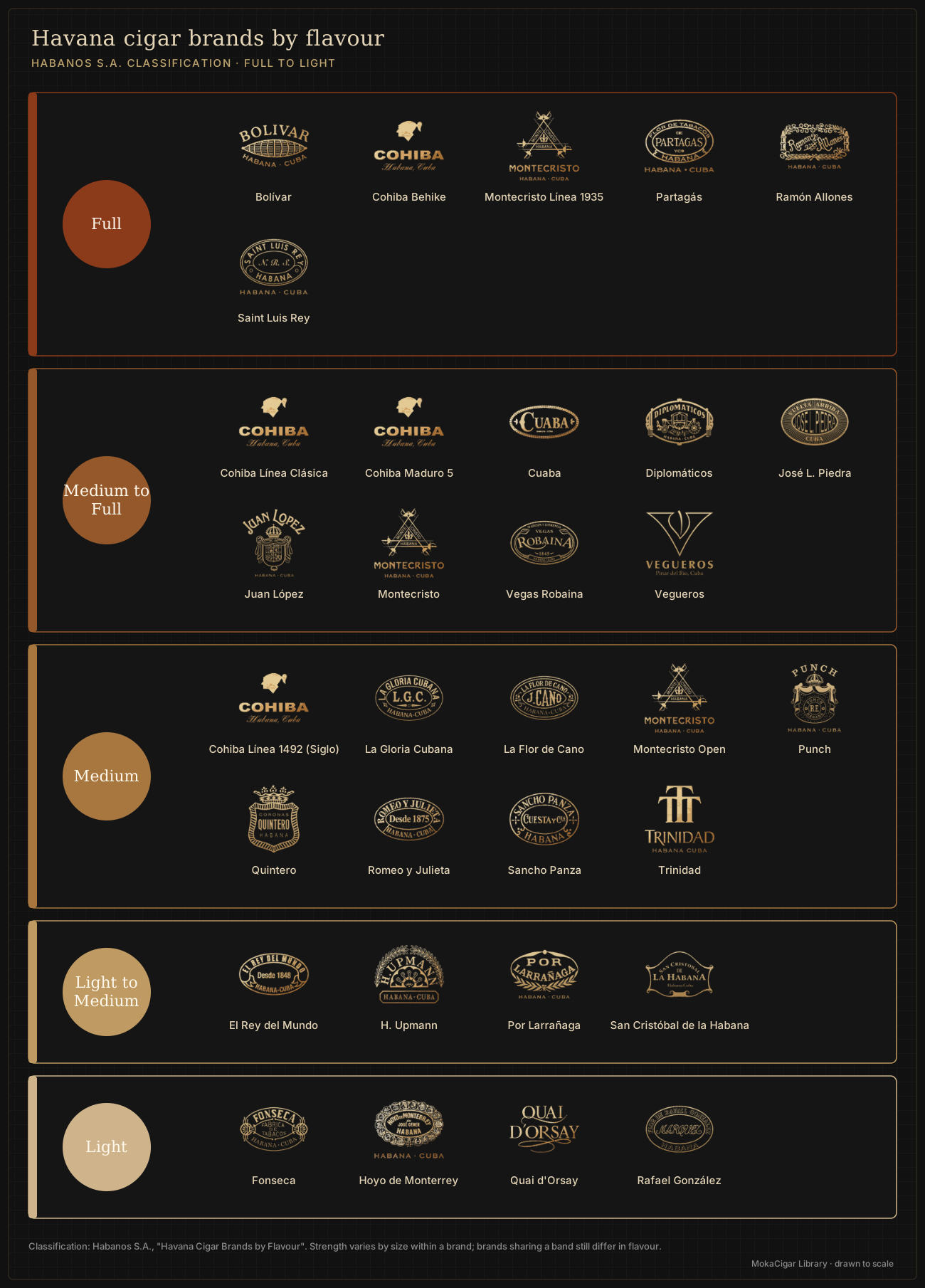
The Habanos classification of Cuban cigar brands by flavour, from full to light
Bolívar — Typical strength: Full — Character in a phrase: Dense earth, roasted walnut, dark spice, and heavy leather
Cohiba — Typical strength: Medium to Full (Línea 1492: Medium; Behike: Full) — Character in a phrase: Fresh grass, cocoa bean, fine cedar, vanilla, and honey
Cuaba — Typical strength: Medium to Full — Character in a phrase: Toasted wood, dry nutmeg, damp loam, and savoury tobacco
Diplomáticos — Typical strength: Medium to Full — Character in a phrase: Oak, hazelnut, dry spice, and seasoned leather
El Rey del Mundo — Typical strength: Light to Medium — Character in a phrase: Floral sweetness, subtle honey, light cedar, and toasted brioche
Fonseca — Typical strength: Light — Character in a phrase: Delicate white pepper, herbal tea, biscuit, and soft wood
H. Upmann — Typical strength: Light to Medium — Character in a phrase: Roasted coffee, biscuit, toasted almond, and fragrant cedar
Hoyo de Monterrey — Typical strength: Light — Character in a phrase: Sweet wood, fresh cream, cinnamon, and mineral earthiness
José L. Piedra — Typical strength: Medium to Full — Character in a phrase: Rustic earth, bitter cocoa, leather, and coarse tobacco
Juan López — Typical strength: Medium to Full — Character in a phrase: Rich cedar, dried citrus peel, warm spice, and toasted nuts
La Flor de Cano — Typical strength: Medium — Character in a phrase: Floral notes, sweet cedar, light herbal nuances, and dry fruit
La Gloria Cubana — Typical strength: Medium — Character in a phrase: Exotic fruit, floral aromatics, refined cedar, and white pepper
Montecristo — Typical strength: Medium to Full (Línea 1935: Full; Open: Medium) — Character in a phrase: Bitter chocolate, roasted espresso, toasted beans, and spice
Partagás — Typical strength: Full — Character in a phrase: Deep damp earth, crushed black pepper, leather, and cocoa
Por Larrañaga — Typical strength: Light to Medium — Character in a phrase: Caramel, sweet brioche, floral honey, and gentle cedar
Punch — Typical strength: Medium — Character in a phrase: Woody tang, dried fruit, walnut, and herbal spice
Quai d'Orsay — Typical strength: Light — Character in a phrase: Patisserie cream, sweet biscuit, hay, and dry hazelnut
Rafael González — Typical strength: Light — Character in a phrase: Subtle chocolate, light wood, sweet hay, and almond
Ramón Allones — Typical strength: Full — Character in a phrase: Stewed dark fruit, dark chocolate, wood tannin, and earth
Romeo y Julieta — Typical strength: Medium — Character in a phrase: Cedar, floral rosewater, cherry stone, almond, and leather
Saint Luis Rey — Typical strength: Full — Character in a phrase: Oily leather, dark roasted coffee, damp earth, and intense wood
San Cristóbal de la Habana — Typical strength: Light to Medium — Character in a phrase: Pancake syrup, toasted wood, cocoa, molasses, and coffee bean
Sancho Panza — Typical strength: Medium — Character in a phrase: Salty mineral tang, roasted grain, toasted cedar, and dry herb
Trinidad — Typical strength: Medium — Character in a phrase: Cream, light cedar, hazelnut, warm baking spice, and coffee bean
Vegas Robaina — Typical strength: Medium to Full — Character in a phrase: Earthy sweetness, dark espresso, cocoa, and aged leather
Vegueros — Typical strength: Medium to Full — Character in a phrase: Grassy freshness, wet earth, roasted hazelnut, and herbal spice
What are the mildest Cuban cigars?
The mildest Cuban cigars are defined by gentle nicotine delivery, delicate aromatics, and a low proportion of ligero leaf in the filler blend. Benchmark examples include the Hoyo de Monterrey Epicure No. 2, the Quai d'Orsay No. 50, and the Fonseca No. 1. These vitolas are blended predominantly from volado and seco leaves harvested from the lower and middle tiers of the tobacco plant.
The Hoyo de Monterrey Epicure No. 2 remains the quintessential morning or afternoon smoke for collectors. It opens with sweet cedar, fresh double cream, and subtle mineral sweetness without overwhelming the palate. Slimmer vitolas such as the Hoyo de Monterrey Le Hoyo du Député or the Rafael González Perlas offer an equally refined, approachable experience in shorter formats.
Quai d'Orsay represents another superb expression of light Cuban tobacco. Vitolas like the Quai d'Orsay Coronas Claro and No. 50 deliver dry brioche, pastry cream, and toasted almond notes. These lighter cigars age with exceptional grace, developing floral honey and light tea nuances after five to ten years in a properly conditioned humidor.
What are the strongest Cuban cigars?
The strongest Cuban cigars are robust, full-bodied expressions crafted for post-prandial smoking, blended with a heavy proportion of oil-rich ligero leaves. Leading benchmarks include the Bolívar Belicosos Finos, the Partagás Serie D No. 4, and the Ramón Allones Specially Selected. These cigars deliver a pronounced nicotine impact alongside deep flavours of damp earth, black pepper, and leather.
Bolívar represents the peak of power within the Habanos portfolio. Vitolas such as the Belicosos Finos and Royal Coronas yield intense dark chocolate, roasted walnut, and heavy leather backed by a formidable nicotine spine. Similarly, the Partagás Lusitanias—a legendary double corona—evolves over two hours from dry cedar into a commanding crescendo of crushed pepper, sourdough, and espresso.
The revered Cohiba Línea Behike vitolas (BHK 52, BHK 54, and BHK 56) command exceptional strength through their inclusion of medio tiempo leaf. These rare, sun-drenched leaves from the crown of the plant impart profound strength, intense savoury density, and lingering spice. When acquiring these high-value cigars, collectors should inspect authentication seals and bands against our guide on how to spot fake Cuban cigars.
How leaf, wrapper, and ring gauge shape cigar strength
Every long-filler Habano relies on three core leaf primings from the tobacco plant. Volado leaves, harvested from the bottom of the stalk, possess low nicotine and mild flavour, serving primarily to ensure even combustion. Seco leaves, harvested from the middle of the plant, provide moderate strength and act as the principal aromatic engine of the blend. Ligero leaves, cut from the sun-drenched top, are laden with oils and nicotine, providing body, power, and slow-burning spice.
Torcedores always position dense ligero leaves in the exact centre of the filler bunch. This placement ensures a steady burn while allowing nicotine and oils to vaporise gradually through the cooler surrounding leaves. In elite blends like the Cohiba Behike, blenders introduce medio tiempo—the two topmost leaves that appear on select plants—delivering unmatched power and savoury richness.
The wrapper leaf (capa) provides visual elegance, but its flavour contribution depends heavily on the format. In slender vitolas like a Panetela or Petit Corona, the wrapper constitutes up to 20 percent of the total tobacco, exerting a prominent influence on the smoke. In thick ring gauges, the wrapper represents less than 10 percent of the mass, allowing the filler to dominate. Darker maduro wrappers undergo extended natural fermentation, imparting subtle notes of bitter chocolate, dried fruit, and toasted molasses.
Ring gauge exerts a direct physical control over combustion dynamics and perceived strength. Thicker cigars, such as a 50 to 54 ring gauge Robusto or Cañonazo, draw more air and burn at cooler internal temperatures. This cooling prevents delicate oils from scorching and allows blenders to incorporate complex multi-leaf filler recipes. Slender cigars burn hotter and concentrate the smoke through a narrower opening, creating a sharper, more focused delivery of nicotine on the palate.
What does a cigar taste like?
A premium cigar tastes of natural, cured tobacco flavours, primarily encompassing wood, earth, leather, roasted nuts, coffee, and gentle spice. Because premium cigars contain no artificial flavourings, these notes arise from the plant's natural sugars, essential oils, and minerals developed during curing and fermentation. The overall sensation balances savoury umami with a gentle underlying sweetness.
What flavours do Cuban cigars have?
Cuban cigars present an intricate, balanced spectrum of flavours characterised by damp earth, aged cedar, rich leather, roasted cocoa, coffee, and subtle baking spice. These notes develop naturally through the curing, fermentation, and aging of native black tobacco varieties without artificial additives. While each marque expresses a distinct personality, authentic Havanas are defined by a harmonious balance between savoury depth and mineral sweetness.
Key flavour families across the 27 houses include:
Earth and mineral: Foundational notes derived from the iron-rich red soils of the Vuelta Abajo, prominent in Partagás, Bolívar, and Saint Luis Rey.
Cedar and fine wood: Fragrant Spanish cedar and oak form the aromatic backbone of Romeo y Julieta, Hoyo de Monterrey, and Trinidad.
Leather and animal notes: Aged saddle leather and savoury tannins feature heavily in Montecristo and Ramón Allones, deepening past the midway mark.
Cocoa, coffee, and nuts: Bitter dark chocolate and espresso beans characterise Montecristo and Vegas Robaina, while H. Upmann exhibits toasted almond.
Honey and sweetness: Caramelised honey, floral nectar, and sweet brioche define Por Larrañaga and San Cristóbal de la Habana.
What does "barnyard" mean in Cuban cigars?
In Cuban cigar terminology, "barnyard" refers to a desirable aroma of damp hay, stable straw, rich earth, and clean leather detected on the unlit wrapper and cold draw. It is a hallmark of properly fermented, oil-rich Cuban black tobacco that has matured in Spanish cedar cabinets. Collectors should distinguish this sweet farmyard bouquet from the pungent scent of ammonia, which indicates an under-fermented, excessively young cigar that requires further humidor rest.
Why a cigar evolves across its thirds
A handmade Habano is divided conceptually into three stages known as *tercios*. As combustion progresses down the barrel, heat, distillation, and moisture transform the smoke's strength and flavour profile.
In the first third (*el primer tercio*), the cigar burns at its coolest. The smoker experiences the clean, delicate introductory notes of the blend—often sweet cedar, light hay, and floral nuances—uncluttered by heat or oil buildup.
In the second third (*el segundo tercio*), the core personality of the house asserts itself. The warming ember releases heavier oils stored within the seco and ligero leaves, deepening notes of toasted nuts, coffee, leather, and balanced spice.
In the final third (*el último tercio*), smoke passes repeatedly through the remaining tobacco, depositing condensed oils and tars. This concentration intensifies body, earth, and nicotine power, which will turn unpleasantly harsh if the cigar is puffed too rapidly.
Why Cuban cigars taste different from Dominican and Nicaraguan cigars
The sensory distinction between Cuban and New World cigars is defined by terroir, seed lineage, and curing heritage. The red, limestone-rich soils of Cuba's Vuelta Abajo, coupled with native Corojo and Criollo cultivars, impart a distinctive savoury-sweet umami, moist earthiness, and aromatic balance that cannot be replicated elsewhere. Nicaraguan cigars, cultivated in volcanic soil, typically deliver upfront black pepper, dark roasting notes, and overt strength, while Dominican leaves lean towards grassy, mild smoothness and dry cedar. Cuban blenders prioritise aromatic finesse and balanced aging over raw power, a distinction examined thoroughly in our guide to Cuban versus non-Cuban cigars.
How to describe and record cigar taste
Perceiving the full aromatic complexity of a Habano requires an unhurried, attentive approach. The human tongue detects only five basic tastes, meaning that intricate nuances such as cedar, cocoa, and leather are registered through the olfactory receptors via retronasal exhalation. Aficionados gently push a small portion of smoke through the nasal passage while maintaining a slow smoking cadence of one draw per minute to keep the ember cool. Serious collectors record their tastings—including format, burn characteristics, factory codes, and flavour transitions—in the MokaCigar Smoke Log.
At MokaCigar
MokaCigar is a London Cuban cigar house, founded by Ehab Abdallah as a club in 2014 and a company in 2019. To find your own place on the scale, try a light house such as Hoyo de Monterrey beside a full one such as Partagás, and note the difference in your free Smoke Log.