Cigar sizes and shapes explained, with a size chart
A cigar's size is determined by two physical measurements: its length, expressed in millimetres or inches, and its diameter, known as the ring gauge, measured in 64ths of an inch. Together, these measurements define the vitola—the formal architecture that dictates tobacco volume, burn rate, and temperature. Understanding format allows collectors and discerning smokers to select the right Habano for the time and occasion at hand.
What are the different cigar sizes?
The world of premium Cuban cigars classifies dimensions through a precise dual system: the factory name and the commercial name. The *vitola de galera* is the production name used internally by factory managers and the *torcedores* (cigar rollers) who roll each stick to exact weight and dimension blueprints. The *vitola de salida* is the commercial name printed on the box lid and recognized by consumers.
The relationship between factory and commercial vitolas is rarely one-to-one. A single *vitola de galera* is frequently produced across different brands under distinct commercial titles. For example, the venerable *Mareva* factory size is sold as the Montecristo No. 4, the Romeo y Julieta Petit Coronas, and the Cohiba Siglo II. Conversely, the *Cervantes* factory vitola (165 mm by 42 ring gauge) is commercially marketed as the Montecristo No. 1, yet collectors informalize the broader format under the British trade name "Lonsdale".
Ring gauges in the Cuban portfolio traditionally fall into three broad families:
Small formats: ring gauges from 28 to 39 (11.11 mm to 15.48 mm diameter), such as Panetelas.
Medium formats: ring gauges from 40 to 45 (15.88 mm to 17.86 mm diameter), anchored by the classic Corona.
Large formats: ring gauges from 46 to 52 and above (18.26 mm to 20.64 mm+ diameter), encompassing Robustos, Toros, and modern heavy-gauge releases.
While non-Cuban manufacturers have pushed ring gauges to 60 or beyond, Habanos S.A. maintains a portfolio largely anchored in classical balance, where combustion temperature and leaf proportion remain in harmony.
Parejo versus figurado shapes
Every cigar format belongs to one of two fundamental physical silhouettes: parejos and figurados.
*Parejos* are straight-sided cigars with a uniform cylindrical body, an open foot where the flame is applied, and a rounded, closed cap that must be cut before smoking. The vast majority of standard production cigars—including Coronas, Robustos, and Churchills—are parejos. Their straight walls allow for a consistent, predictable draw and an even burn line from start to finish.
*Figurados* encompass all cigars that depart from the straight cylinder. These irregular shapes require master rollers with years of training, as distributing the filler tobacco evenly through uneven contours demands immense dexterity. Common figurado styles include:
Pirámide: straight-bodied along the barrel but tapering sharply to a pointed head.
Campana (Belicoso): a shorter format with straight sides and a conical head that tapers over a brief distance.
Double Figurado: tapered at both the head and the foot, such as the *Salomón* and *Diadema* rolled by Cuaba.
The tapered head of a figurado acts as a physical funnel. By concentrating the smoke through a narrower aperture as it leaves the cigar, figurados focus the flavour directly onto the palate, often lending the blend a perception of greater intensity and richness.
Cigar size chart in mm and inches
Below is the definitive reference for the most essential Cuban cigar formats, detailing both their informal titles and standardized factory vitolas.
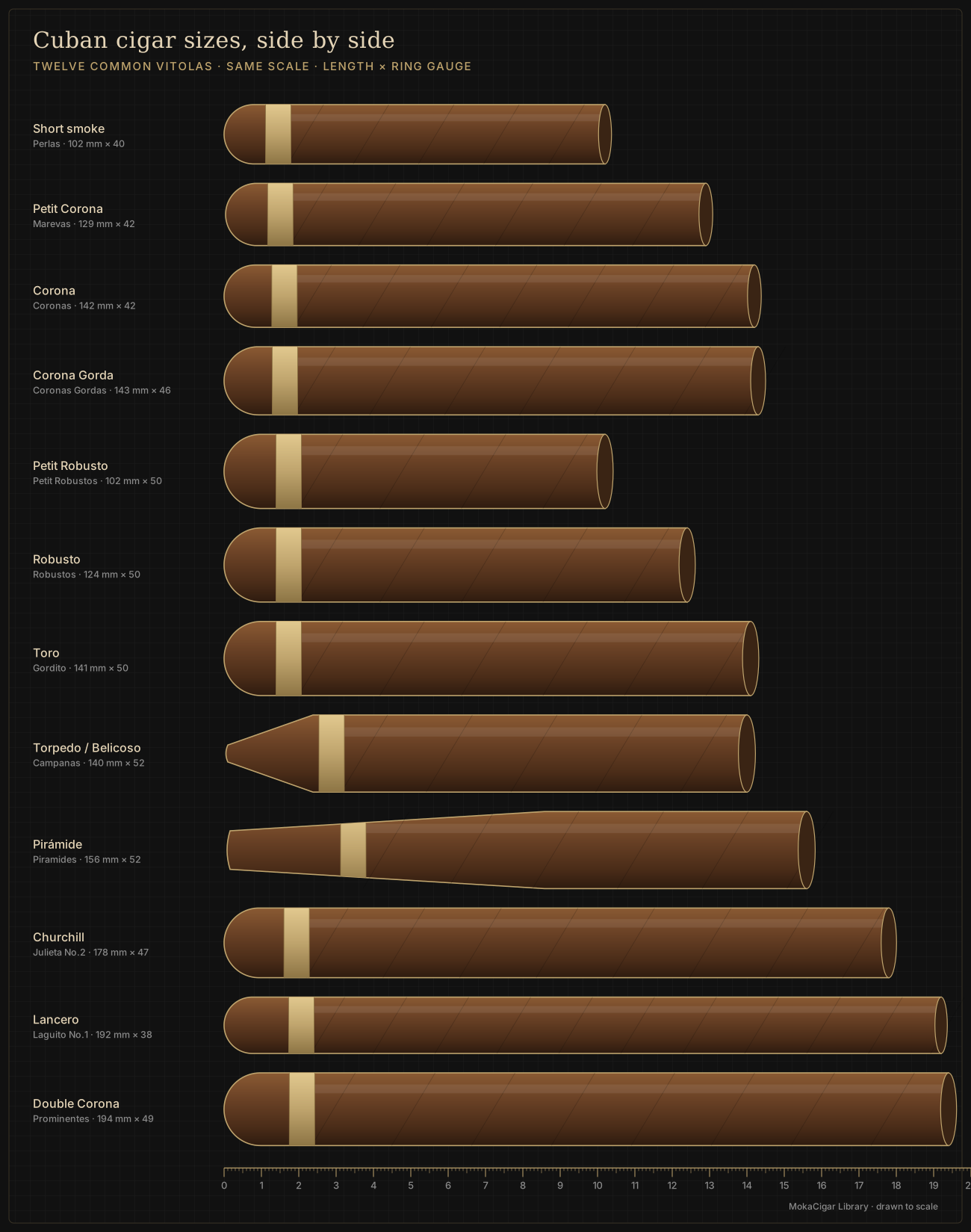
Twelve common Cuban cigar sizes drawn to the same scale, from Perlas to Prominentes
Petit Corona — Cuban factory name (*vitola de galera*): Marevas — Length (mm): 129 mm — Length (in): 5.1 in — Ring gauge: 42 — Typical smoking time: 30–45 mins — Example Habano: Montecristo No. 4
Corona — Cuban factory name (*vitola de galera*): Coronas — Length (mm): 142 mm — Length (in): 5.6 in — Ring gauge: 42 — Typical smoking time: 45–60 mins — Example Habano: Montecristo No. 3
Corona Gorda — Cuban factory name (*vitola de galera*): Coronas Gordas — Length (mm): 143 mm — Length (in): 5.6 in — Ring gauge: 46 — Typical smoking time: 50–70 mins — Example Habano: Hoyo de Monterrey Epicure No. 1
Robusto — Cuban factory name (*vitola de galera*): Robustos — Length (mm): 124 mm — Length (in): 4.9 in — Ring gauge: 50 — Typical smoking time: 45–60 mins — Example Habano: Partagás Serie D No. 4
Petit Robusto — Cuban factory name (*vitola de galera*): Petit Robustos — Length (mm): 102 mm — Length (in): 4.0 in — Ring gauge: 50 — Typical smoking time: 30–40 mins — Example Habano: Hoyo de Monterrey Petit Robustos
Toro / Double Robusto — Cuban factory name (*vitola de galera*): Gordito — Length (mm): 141 mm — Length (in): 5.6 in — Ring gauge: 50 — Typical smoking time: 60–75 mins — Example Habano: Hoyo de Monterrey Epicure Especial
Churchill — Cuban factory name (*vitola de galera*): Julieta No. 2 — Length (mm): 178 mm — Length (in): 7.0 in — Ring gauge: 47 — Typical smoking time: 75–90 mins — Example Habano: Romeo y Julieta Churchill
Double Corona — Cuban factory name (*vitola de galera*): Prominentes — Length (mm): 194 mm — Length (in): 7.6 in — Ring gauge: 49 — Typical smoking time: 90–120 mins — Example Habano: Partagás Lusitanias
Lancero — Cuban factory name (*vitola de galera*): Laguito No. 1 — Length (mm): 192 mm — Length (in): 7.6 in — Ring gauge: 38 — Typical smoking time: 60–90 mins — Example Habano: Cohiba Lanceros
Pirámide — Cuban factory name (*vitola de galera*): Pirámides — Length (mm): 156 mm — Length (in): 6.1 in — Ring gauge: 52 — Typical smoking time: 60–80 mins — Example Habano: Montecristo No. 2
Torpedo / Belicoso — Cuban factory name (*vitola de galera*): Campanas — Length (mm): 140 mm — Length (in): 5.5 in — Ring gauge: 52 — Typical smoking time: 45–60 mins — Example Habano: Bolívar Belicosos Finos
Short smoke — Cuban factory name (*vitola de galera*): Perlas — Length (mm): 102 mm — Length (in): 4.0 in — Ring gauge: 40 — Typical smoking time: 25–35 mins — Example Habano: Cohiba Siglo I
How ring gauge influences flavour and combustion
The diameter of a cigar directly governs the physics of combustion and the relative contribution of each leaf in the blend. Inside the bunch, a torcedor arranges three primary filler leaves: *volado* for combustion, *seco* for aroma, and *ligero* for strength. In selected Cohiba vitolas, a rare fourth leaf, *medio tiempo*, is added from the very top of the plant.
A thicker ring gauge (50 and above) accommodates a greater volume of filler tobacco. This greater surface area allows the cigar to burn more slowly and at a cooler temperature, shielding volatile aromatic oils from scorching. The master blender also has room to incorporate leaves from multiple harvest zones, creating a multi-layered, evolving profile over the duration of the smoke.
In contrast, slender cigars (such as a 38-gauge Lancero) possess a high wrapper-to-filler ratio. The wrapper leaf—the most elastic, oil-rich, and costly leaf on the plant—contributes a far higher percentage of the taste impression on the tongue. However, because their internal thermal mass is smaller, thin formats will overheat if puffed too hastily. A measured cadence of roughly one gentle puff per minute preserves the clean, crisp expression intended by the blender.
Robusto vs Toro vs Churchill: which size should I choose?
When deciding between these three benchmark formats, consider your available time, the desired smoke density, and how you prefer the blend to evolve.
The Robusto (124 mm by 50) is the cornerstone of modern cigar smoking. It provides immediate volume, generous smoke output, and a rich delivery of the brand's core character within 45 to 60 minutes. Because it reaches its optimal burn temperature quickly, it suits contemporary schedules without cutting the experience short.
The Toro—represented in Cuba by vitolas like the Gordito (141 mm by 50)—adds roughly 17 mm of length to the Robusto's girth. That added length extends the smoking duration to 60 or 75 minutes, allowing the transition between the second and final thirds to develop at a more leisurely pace. It is an ideal middle ground for an evening smoke after dinner.
The Churchill, rolled as the *Julieta No. 2* (178 mm by 47), is a traditional, formal vitola that demands a full 75 to 90 minutes. With a slightly narrower diameter than a Robusto, it delivers a smoke that is more wrapper-led, drier, and more aromatic in its early stages before deepening into intense concentration. Choose the Churchill when you have the quiet environment required to appreciate its classical progression.
Which cigar size is best for 30 minutes, 1 hour, or 2 hours?
Selecting a cigar based on the clock prevents the mistake of abandoning an expensive stick halfway through or puffing too quickly to finish in time.
30 minutes — Recommended format: Short smoke / Perla — Factory vitola (*vitola de galera*): Perlas — Typical duration: 25–35 mins — Example Habano: Cohiba Siglo I
1 hour — Recommended format: Robusto or Corona Gorda — Factory vitola (*vitola de galera*): Robustos — Typical duration: 45–60 mins — Example Habano: Partagás Serie D No. 4
2 hours — Recommended format: Double Corona or Churchill — Factory vitola (*vitola de galera*): Prominentes — Typical duration: 90–120 mins — Example Habano: Partagás Lusitanias
For a half-hour window, forcing a Robusto will overheat the tobacco and turn the final third acrid. A dedicated short smoke like a Perla or Minuto provides a cool, balanced smoke engineered specifically for that brief timeframe. Conversely, an afternoon on a sheltered terrace justifies a Double Corona, whose substantial volume burns with unmatched coolness across two full hours.
What are the biggest and smallest Cuban cigars?
The Montecristo 'A', rolled to the Gran Corona factory vitola, stands as the longest regular-production Habano at 235 mm (9¼ inches) with a 47 ring gauge. For total volume among tapered formats, the Cuaba Salomón measures 184 mm with a substantial 57 ring gauge.
Cuba's smallest regular-production long-filler cigar is the Cohiba Panetelas (factory vitola Laguito No. 3), measuring 115 mm with a slender 26 ring gauge. Among shorter standard formats, the El Rey del Mundo Demi Tasse (Entreactos vitola) measures just 100 mm with a 30 ring gauge.
At MokaCigar
MokaCigar is a London Cuban cigar house, founded by Ehab Abdallah as a club in 2014 and a company in 2019. Every product page in the shop gives the vitola, length and ring gauge, so you can choose by the time you have; the vitola pages list which cigars share each factory size.
Questions collectors ask
Sources consulted: Hunters & Frankau Havana Cigar Guide · Habanos S.A. Official Vitolario · MokaCigar Library Archive