```
Anatomy of a Habano: capa, capote and tripa
A Habano is a complex agricultural product constructed from up to five distinct types of tobacco leaf, each cultivated and chosen for a specific purpose. The physical anatomy of a Cuban cigar comprises three main sections: the capa (wrapper), the capote (binder), and the tripa (filler blend). Understanding how these elements are grown, graded, and assembled by the roller provides insight into the burn, draw, and flavour profile of the finished cigar.
What are the three parts of a hand-made cigar?
diagram
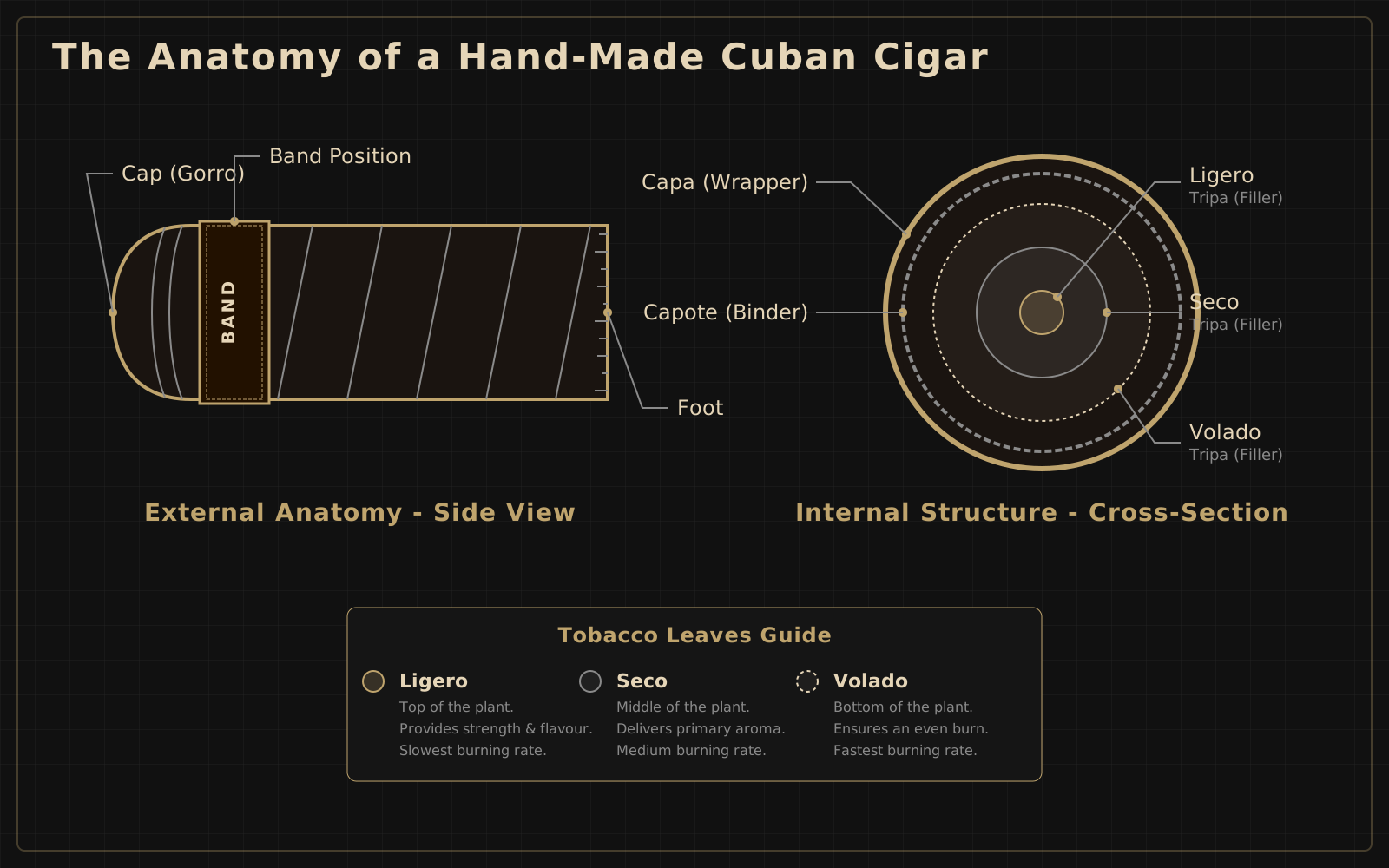
A hand-rolled Cuban cigar is built in concentric layers designed to control the flow of smoke and air. The innermost layer is the tripa, or filler, which provides the bulk of the flavour, the aroma, and the strength of the blend. This core is held under strict tension by the capote, the binder leaf, forming a dense cylinder known in the factory as the bunch.
The final, visible layer is the capa, the wrapper leaf. This single, highly elastic leaf is wrapped tightly around the bunched filler and binder to provide a flawless exterior. Together, these three components dictate the physical and aromatic characteristics of the Habano, requiring years of training for a roller to master.
How does the filler blend construct flavour?
The tripa is the heart of the cigar, dictating the evolution of taste as it burns. For premium Cuban cigars, this blend typically uses three distinct types of leaf, graded by their position on the tobacco plant.
Ligero leaves are taken from the top of the plant, where they receive the most direct sunlight. They are thick, rich in oils, and provide the primary strength and dark, intense flavours. Because they burn very slowly, the roller must place the ligero leaves in the exact centre of the bunch to ensure a conical burn line.
Seco leaves are harvested from the middle section of the plant. They are lighter in colour and texture than ligero and are responsible for the primary aromas and the complexity of the blend.
Volado leaves come from the bottom of the plant, closer to the soil. They offer very little in terms of flavour but are highly combustible, ensuring the cigar burns consistently. A skilled roller must balance these three leaves precisely to maintain the intended profile of the vitola and ensure an even draw from the first puff to the last.
What is the role of the capote?
The capote, or binder, acts as the structural foundation of a Habano. Selected for its tensile strength and elasticity rather than its appearance, the binder holds the compressed filler leaves together and defines the final shape of the cigar.
In Cuban production, binder leaves are typically harvested from the volado or lower seco primings. These leaves are chosen from plants grown in the open sun, giving them the resilience required to withstand the pressure of the mould. A poorly applied capote will result in a soft, uneven cigar that draws badly and burns at a severe angle. The binder also contributes to combustibility, assisting the volado in maintaining an even smoulder.
What do wrapper colours tell the collector?
The capa is the most expensive and carefully cultivated leaf on a Habano. Grown under muslin cloth (tapado) to filter harsh sunlight, wrapper leaves remain thin, elastic, and smooth to the touch. While the wrapper accounts for a very small percentage of the cigar's overall weight, it contributes significantly to the final aroma and the texture on the lips.
Wrapper colours range across a wide spectrum, from light claro to very dark maduro. A claro wrapper, often green-brown, typically indicates a lighter, more floral and delicate aroma. A colorado wrapper has a reddish-brown hue and offers a richer, slightly sweeter profile, often found on classic medium-bodied cigars. A maduro wrapper is dark brown to almost black, having undergone extensive fermentation, and usually imparts a sweet, roasted, and heavy character.
It is a common misconception among novice smokers that a dark wrapper indicates a strong cigar. True nicotine strength comes entirely from the filler blend. The wrapper influences aroma, combustion temperature, and the initial perception of taste on the palate.
Leaf Classification Table
Capa — Function in Habano: Exterior presentation and aroma — Plant Position: Shade-grown (Tapado) — Characteristics: Thin, elastic, flawless appearance
Capote — Function in Habano: Structure and shape — Plant Position: Sun-grown (Middle/Bottom) — Characteristics: High tensile strength, combustible
Ligero — Function in Habano: Strength and deep flavour — Plant Position: Sun-grown (Top) — Characteristics: Thick, oily, slow-burning
Seco — Function in Habano: Aroma and complexity — Plant Position: Sun-grown (Middle) — Characteristics: Medium texture, highly aromatic
Volado — Function in Habano: Combustibility — Plant Position: Sun-grown (Bottom) — Characteristics: Thin, fast-burning, neutral flavour
How do the cap and the foot function?
The foot is the open end of the cigar which is lit. In a hand-made Habano, the foot is cut perfectly flat with a guillotine, exposing the intricate folds of the filler and binder. Examining the foot reveals the density of the bunch and the ratio of dark, oily ligero to the lighter seco and volado leaves.
The cap is a separate, small piece of wrapper leaf applied to the head of the cigar to secure the wrapper and prevent it from unravelling during smoking. In premium Cuban production, this is traditionally a "triple cap", formed by winding the wrapper flag and applying two distinct circular cut-outs. The cap must be cut precisely, just above the shoulder, before smoking; cutting too deep will compromise the wrapper's tension.
Tripa larga versus tripa corta
Premium Habanos are classified as tripa larga, meaning long filler. This indicates that the filler consists of whole tobacco leaves running the entire length of the cigar. This continuous structure allows the smoke to travel smoothly, delivering an evolving flavour profile across the three thirds of the cigar's length.
Tripa corta, or short filler, uses chopped pieces of tobacco leaf. These are often the offcuts generated during long filler production. While some hand-made Cuban cigars use short filler, they burn faster and offer a more uniform, less complex tasting experience. Habanos labelled as "Totalmente a Mano" (totally by hand) will be either tripa larga or tripa corta, and the box markings must be checked to confirm. Machine-made cigars, which are not considered premium Habanos, exclusively use short filler and often employ homogenised tobacco leaf for binders.
Vitolas and their impact on construction
The dimensions of a cigar, known as its vitola, dictate how the anatomy is balanced. A heavy ring gauge cigar, such as a Robusto (50 ring gauge by 124mm), allows the roller to include a greater proportion of ligero leaf, often resulting in a cooler smoke and a wider spectrum of blending options.
Conversely, a slender format like the Lancero (38 ring gauge by 192mm) restricts the volume of filler. The roller must rely heavily on seco and volado to maintain combustibility, meaning the wrapper leaf exerts a proportionally larger influence on the overall flavour. The construction of a thin ring gauge cigar demands the highest level of skill from the torcedor to avoid tight draws and plugged sections.
How construction shows in draw and burn
The physical construction of a Habano is ultimately tested by its draw and its burn. A perfect draw offers a slight, satisfying resistance, similar to drinking through a straw. This indicates that the roller has distributed the filler leaves evenly, without twisting them or over-packing the binder.
An even burn line demonstrates that the combustible volado leaves and the slow-burning ligero leaves have been placed correctly. If the heavy ligero is positioned off-centre, the cigar will burn unevenly, a flaw known as "canoeing". Proper storage is equally critical; an over-humidified cigar will swell, tightening the draw and restricting combustibility, while an under-humidified cigar will burn rapidly and unpleasantly hot.
What to check before lighting a Habano
When acquiring cigars, serious collectors should meticulously inspect the physical construction. The wrapper should be slightly oily, with minimal veins, and consistent in colour across the entire box. A light squeeze along the length of the barrel should yield a firm but springy resistance. Hard spots indicate a plug in the bunch, while soft spots suggest under-filling.
The box itself provides critical information for authentication and provenance. Always verify the factory and date codes stamped on the base, as explained in our cigar box code guide. For the UK market, ensure the presence of an English Market Selection (EMS) stamp, which guarantees the box has passed strict quality control and has been stored in optimal conditions. Knowing how to spot fake Cuban cigars begins with understanding what flawless, factory-standard construction looks and feels like.
At MokaCigar
Verifying the physical integrity and authenticity of a Habano is fundamental to our practice. We inspect the construction, wrapper quality, and box codes of every box we receive, ensuring they meet the standards required for the EMS mark and long-term aging. For collectors looking to acquire thoroughly vetted Cuban cigars, explore our full portfolio in the shop, where every box is checked before it enters our humidor.