How to cut a cigar
A cigar cut is the precise removal of a portion of the closed cap, creating an aperture through which smoke can be drawn. This preparation step requires the right tool and a deliberate technique to expose the filler leaves without damaging the surrounding wrapper. The objective is to achieve a clean opening that allows an unimpeded draw while maintaining the structural integrity of the cigar. A poorly executed cut can ruin the mechanics of the smoke, causing the wrapper to unravel.
The anatomy of the cap
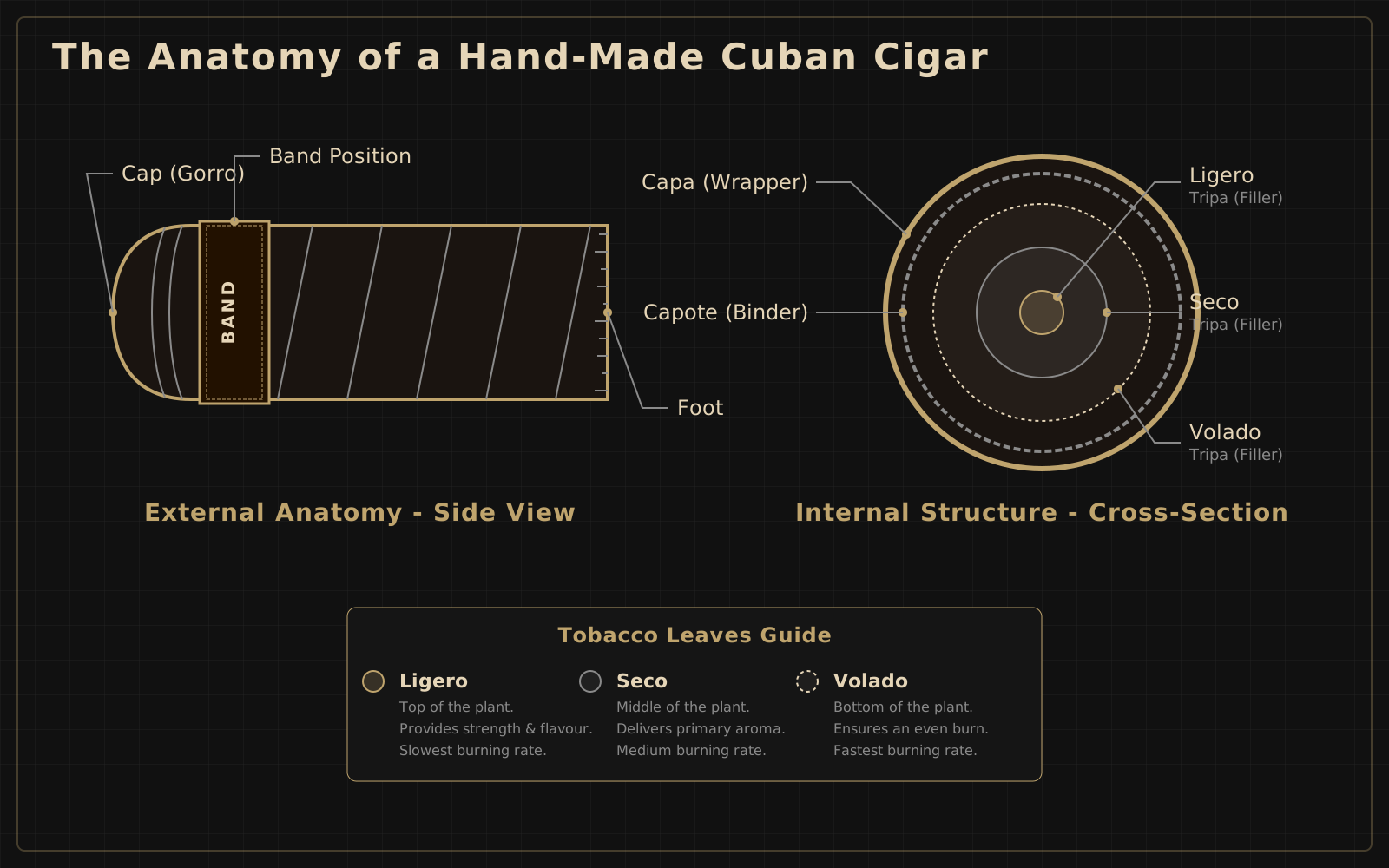
The cap and shoulders of a cigar
Before making any cut, it is essential to understand the construction of the cigar's head. The cap is a small, carefully cut piece of wrapper leaf applied by the torcedor to seal the head once the bunch has been rolled. It secures the wrapper in place and prevents the outer leaf from unravelling during storage and smoking.
Depending on the factory and the specific vitola, a premium Cuban cigar will typically feature a double or triple seam at the cap. The torcedor seals this cap using a small amount of natural, tasteless vegetable adhesive.
The shoulder is the gently curved area where the straight cylindrical body of the cigar begins to taper inward towards the head. When preparing to smoke, the goal is to remove just enough of the cap to create an opening, always cutting above this shoulder line. Cutting too far down removes the cap entirely, slicing past the adhesive that holds the cigar together. This will inevitably cause the wrapper to detach and the cigar to unspool in the hand.
Tools worth owning
Using improper implements, such as a pocket knife or one's teeth, will tear the tobacco and crush the binder. A dedicated, sharp tool is necessary for a clean cut that preserves the carefully constructed head.
The double-blade guillotine is the standard instrument for most smokers, favoured for its reliability and versatility. Its two opposing blades slice through the tobacco from both sides simultaneously. This dual action applies even pressure that prevents the cigar from being crushed. The finest guillotines feature surgical stainless steel blades that retain their edge for years. Some feature a closed back, allowing the user to rest the cigar against the backplate for a perfect, measured cut.
Cigar scissors operate on the same principle, offering curved blades and excellent visibility of the cutting area. They offer surgical precision but require a steady hand and more practice to handle smoothly.
A cigar punch features a circular edge that is gently twisted into the cap to extract a small cylindrical core of tobacco. This method leaves the shoulder entirely intact and significantly reduces the risk of the wrapper splitting.
Finally, the V-cutter uses an angled blade to remove a wedge-shaped notch from the head, opening a deep channel for the smoke. While less common today, it remains a useful tool for specific formats, providing a unique draw profile.
Choosing the right cut for the vitola
The format and ring gauge of your cigar dictate which cutting method is most appropriate. A straight cut from a double-blade guillotine is universally applicable to all standard parejo (straight-sided) cigars. It provides the widest possible aperture, ensuring the draw is as open as the torcedor intended. This disperses the smoke evenly across the palate, providing a cooler draw suited to nuanced blends.
The punch cut is particularly suitable for large ring gauge parejos, such as a Robusto or a Toro. Because the opening is smaller than a straight cut, the punch focuses the smoke stream directly onto the centre of the palate, which can intensify the flavour profile. However, a punch cannot be used on a tapered figurado, as the pointed head lacks the flat surface area required.
The V-cut also concentrates the draw and is traditionally matched with smaller ring gauge cigars or short-filler formats. When applied to larger cigars, it directs the smoke differently than a straight cut. Some smokers prefer this method for complex blends, as it alters the way the tasting notes are perceived.
How much to take off
The primary rule of cutting a cigar is to remove less than you think you need. For a standard straight cut on a parejo, you should aim to slice off a mere two to three millimetres of tobacco. Look closely at the head of the cigar to identify the seams of the cap. The cut must be made above the lowest seam, leaving a distinct ring of the cap leaf attached to the shoulder.
A common technique for beginners using an open-backed guillotine is to lay the cutter flat on a table, stand the cigar perfectly upright within the aperture, and close the blades. This naturally removes a safe two millimetres of the cap.
If the draw remains too firm after the initial cut, you can always remove another millimetre. Conversely, if you cut below the cap line initially, the structural damage cannot be undone.
When handling figurados and pirámides, the tapering head requires a progressive approach. Begin by cutting approximately five millimetres from the pointed tip. If the cold draw is tight, remove small increments of a millimetre at a time until it reaches a comfortable resistance.
Common mistakes to avoid
The most frequent error is over-cutting, which removes the structural seal of the cap entirely. This often happens when the smoker places the cigar blindly into a guillotine rather than visually aligning the blades with the cap line. Once the cap is gone, the tension holding the wrapper is lost, and the leaf will begin to unfurl.
Crushing the head is another common issue, usually resulting from dull blades or a hesitation during the cutting motion. A cut should be executed with a single, swift, and confident squeeze of the blades. If the user hesitates, the blades will pinch and compress the tobacco rather than slice it, leading to a compromised draw.
The condition of the cigar also plays a crucial role. Attempting to cut a dry cigar will almost certainly result in the cap shattering. Proper storage at EMS conditions is vital; properly humidified tobacco is supple and yields a clean cut.
Finally, wetting the cap in the mouth before cutting is an older practice that is best avoided. The moist tobacco compresses under the blades rather than slicing cleanly, which can block the draw.
Cut types and suitable shapes
Straight Cut (Guillotine) — Suitable Shapes: Parejos, Figurados, Torpedos — Cut Depth: 2–3 mm (Parejos), 5 mm (Figurados) — Draw Characteristic: Open, unimpeded, cooler smoke
Punch Cut — Suitable Shapes: Large ring gauge Parejos — Cut Depth: 1–2 mm depth — Draw Characteristic: Concentrated, intense, focused
V-Cut — Suitable Shapes: Small ring gauge Parejos — Cut Depth: Wedge notch — Draw Characteristic: Directed, complex
Scissor Cut — Suitable Shapes: Parejos, Figurados, Torpedos — Cut Depth: 2–3 mm (Parejos), 5 mm (Figurados) — Draw Characteristic: Open, unimpeded, traditional
At MokaCigar
Proper preparation ensures that a fine cigar delivers its full potential from the first draw to the final third. At MokaCigar, we inspect every box to verify its authenticity and box code, ensuring that the cigars you receive are in perfect condition to cut, light, and enjoy. Whether you prefer the classic straight cut of a guillotine for a Churchill or the precision of a punch for a large ring gauge Robusto, you can browse our curated selection of tools and Habanos on our shop.