Buying vintage and rare Habanos: a collector's checklist
Acquiring vintage and rare Habanos requires a methodical approach to provenance, condition, and authenticity. This checklist provides collectors with the necessary criteria to evaluate aged Cuban cigars, from deciphering box codes to assessing storage history. By applying these standards, buyers can navigate the secondary market with confidence and secure genuine investments.
What makes a Habano rare?
Rare Cuban cigars generally fall into specific production categories or historical brackets. The Gran Reserva and Reserva lines represent the highest tier of regular production, using tobacco aged for five and three years respectively before rolling. The Edición Limitada programme, introduced in 2000, offers distinct vitolas not found in a brand's standard portfolio, featuring wrapper leaves aged for at least two years.
Ediciones Regionales, created for specific global distributors, offer another layer of scarcity. These are commissioned in small batches and are often only available in their designated country of origin upon release. Furthermore, discontinued vitolas from standard lines, such as the Partagás Serie D No. 3, are highly prized by collectors.
However, rarity is not solely defined by limited releases. Standard production cigars with early box dates become rare simply through attrition, as fewer intact boxes survive over the decades. A standard production cabinet from the 1990s is often harder to locate than a recent limited edition.
Provenance and storage history
The production year of a cigar is a secondary concern if it has not been kept correctly. Provenance—the documented history of ownership and storage—dictates the quality and value of a vintage Habano. A cigar rolled in 1998 that has suffered temperature fluctuations or low humidity will smoke poorly, regardless of its age. Restoring a dried-out cigar is possible, but the essential oils lost during improper storage can never be replaced.
Collectors should look for cigars that have resided in professional, climate-controlled conditions since their initial purchase. The English Market Selection (EMS) stamp, applied by the exclusive UK importer Hunters & Frankau, is a strong indicator of initial quality and proper early handling. The EMS guarantee signifies that the boxes were inspected and stored in appropriate conditions upon arriving in the country.
When assessing a box, evidence of consistent storage is paramount. Cracked wrappers, mould, or signs of the tobacco beetle indicate significant storage failures. Conversely, clean cedar and well-preserved wrappers point to steady, long-term maturation.
The box code: what it proves and what it does not
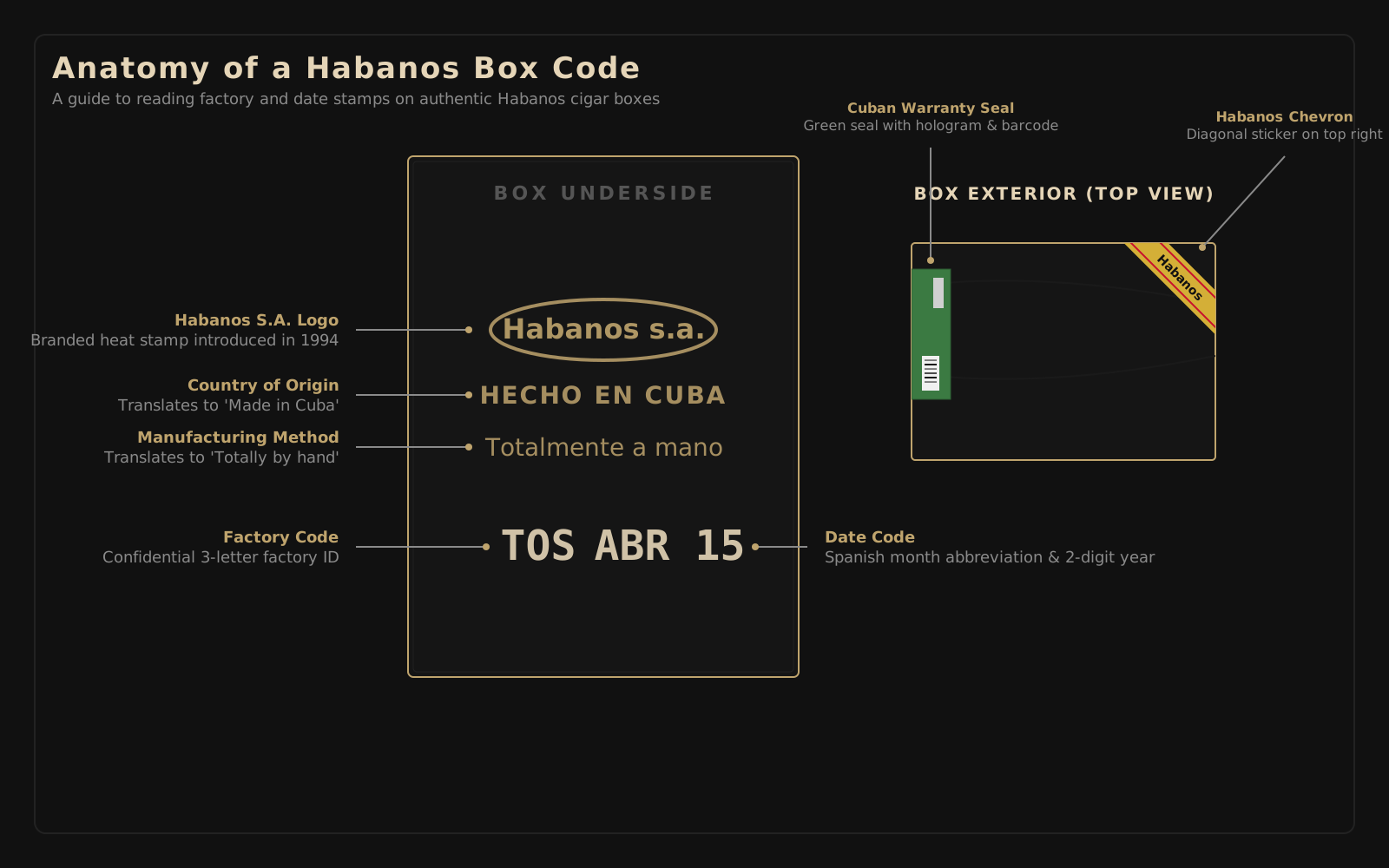
Box code anatomy
The factory and date stamp on the bottom of a Cuban cigar box is a critical piece of information for any collector. Introduced in 1985 and revised multiple times, the modern code consists of a factory cipher and a date indicating the month and year the cigars were boxed. This code allows buyers to target specific eras of production known for exceptional harvests or blending characteristics.
However, a valid box code does not guarantee authenticity. It is common for counterfeiters to stamp genuine factory and date combinations onto fake boxes. Therefore, the code must align with the physical characteristics of the box, the style of the bands for that specific year, and the vitola itself.
A box code is a single data point that must be corroborated by further inspection. If a box is stamped with a 2004 date, but features a band design introduced in 2008, the discrepancy indicates a forgery or a tampered box.
Warranty seals and holograms
The Cuban government warranty seal is another essential tool for verifying Habanos. These seals have evolved significantly over the decades to combat counterfeiting and protect the reputation of the factories. Early seals were simple paper strips, while later generations introduced micro-printing, hidden watermarks, and serial numbers.
Since 2009, Habanos S.A. has incorporated a hologram onto the seal, providing a more robust anti-counterfeiting measure. The serial number on modern seals can be checked against the official Habanos verification database to confirm the brand and vitola. However, the physical seal must still be inspected to ensure it has not been removed from a cheaper box and reapplied.
Collectors must familiarise themselves with the specific seal design used during the year their target box was produced. Mismatched generations, or seals applied to the wrong side of the box, are clear signs of forgery. For detailed guidance on identifying genuine packaging, consult our resource on how to spot fake Cuban cigars.
Pricing logic: full boxes versus loose cigars
The market for vintage Habanos places a significant premium on complete, original boxes. A full box retains all its original packaging, including the warranty seal, factory stamp, and any relevant distributor marks like the EMS sticker. These elements form a verifiable chain of custody that a loose cigar lacks.
Loose cigars, even those with bands indicating a limited release, carry a much higher risk profile. Without the accompanying box, verifying the exact production date and factory becomes nearly impossible. It is also difficult to ascertain if a loose cigar has been stored correctly throughout its entire lifespan.
Consequently, collectors are willing to pay more per stick for a sealed or complete box. The packaging itself provides the necessary assurance of authenticity and consistent ageing. Furthermore, cigars aged together in their original cedar box tend to mature more uniformly, exchanging oils and aromas over the years.
Pre-1999 — Introduction Period: Prior to 1999 — Key Security Features: Red serial numbers (from 1989), simple paper — Verification Method: Visual inspection of paper quality and ink
1999–2009 — Introduction Period: 1999 — Key Security Features: Micro-printing, hidden watermark under UV light — Verification Method: UV light inspection, visual check
2009–2011 — Introduction Period: 2009 — Key Security Features: Hologram added, barcode introduced — Verification Method: Habanos online database check
2011–Present — Introduction Period: 2011 — Key Security Features: Micro-printing on hologram, modified barcode layout — Verification Method: Habanos online database check, magnifying loupe
Sourcing: auctions versus merchants
Collectors typically acquire vintage Habanos through specialist merchants or dedicated cigar auctions. Auctions can offer access to exceptionally rare boxes or large private collections that are not available on the retail market. They also provide a transparent view of current market valuations for specific production years.
However, buying at auction requires the buyer to act as their own authenticator. The buyer assumes the risk if a lot is misdescribed or lacks complete provenance. While auction houses perform basic checks, the ultimate responsibility for verifying the condition and authenticity falls to the winning bidder.
Purchasing from an established Habanos merchant provides a different level of security. Reputable specialists vet their inventory rigorously, rejecting boxes with questionable histories or poor condition. While merchant prices reflect this curation and guarantee, the buyer receives assurance regarding both the authenticity and the smokability of the cigars.
Red flags for collectors
When assessing vintage Habanos, several warning signs should immediately prompt further scrutiny. A box claiming to be twenty years old should exhibit natural signs of age and wear. Packaging that appears overly pristine, lacks expected oxidisation on metal clasps, or has perfectly white paper borders is highly suspicious.
Similarly, cigars that look too fresh or possess an unusually vibrant wrapper colour for their stated age warrant caution. Vintage wrappers tend to lose some of their initial oiliness and adopt a more matte, uniform appearance. Any signs of recent handling or re-banding on an allegedly old cigar should halt the transaction.
Mismatched details are another common indicator of fraud. This includes bands that do not match the design used in the year indicated by the box code, or a vitola that was not in production at that time. If the price of a rare box seems unusually low, it almost certainly indicates a problem.
At MokaCigar
Every vintage and rare Habano offered by MokaCigar undergoes strict scrutiny before it reaches our humidor. Our specialists examine the box codes, warranty seals, band designs, and the physical condition of the cigars to establish a clear chain of provenance. We detail our exact assessment protocols in our guide on how to check cigar authenticity. Collectors can buy with confidence knowing that our MokaVerify system guarantees the legitimacy and superior storage history of every box. Explore our current selection of rare finds from Cohiba and other historic marques in the shop.