```
Ageing Cuban cigars: what changes and how long to wait
Ageing a Cuban cigar is the practice of storing it in a controlled environment over years to allow its constituent tobaccos to marry, mature, and evolve in flavour. While fresh cigars can offer immediate, robust characteristics, time softens rough edges, dissipates harsh compounds, and integrates the oils within the blend. For collectors, mastering the timing and conditions of maturation is the key to experiencing a Habano at its absolute peak.
The chemistry of maturation and the sick period
After a cigar is rolled, the moisture introduced to the leaves during production often triggers a secondary fermentation. This process releases ammonia and other volatile compounds, leading to what is known in the trade as the sick period. If you smoke a cigar during this phase, it can present an uncharacteristically harsh, bitter, or metallic profile.
The sick period typically occurs in the months following the rolling date. During the first year or two in a humidor, the ammonia slowly dissipates. As the cigar rests further, the essential oils and resins from the different leaves—seco, volado, and ligero—begin to migrate and meld. This marrying of oils results in a more cohesive, balanced, and rounded flavour.
Extended ageing then allows for the slow oxidation of these oils, further refining the aromas. The harsh tannins recede, revealing the subtler, more complex nuances intended by the blender.
Reading the box code to determine age
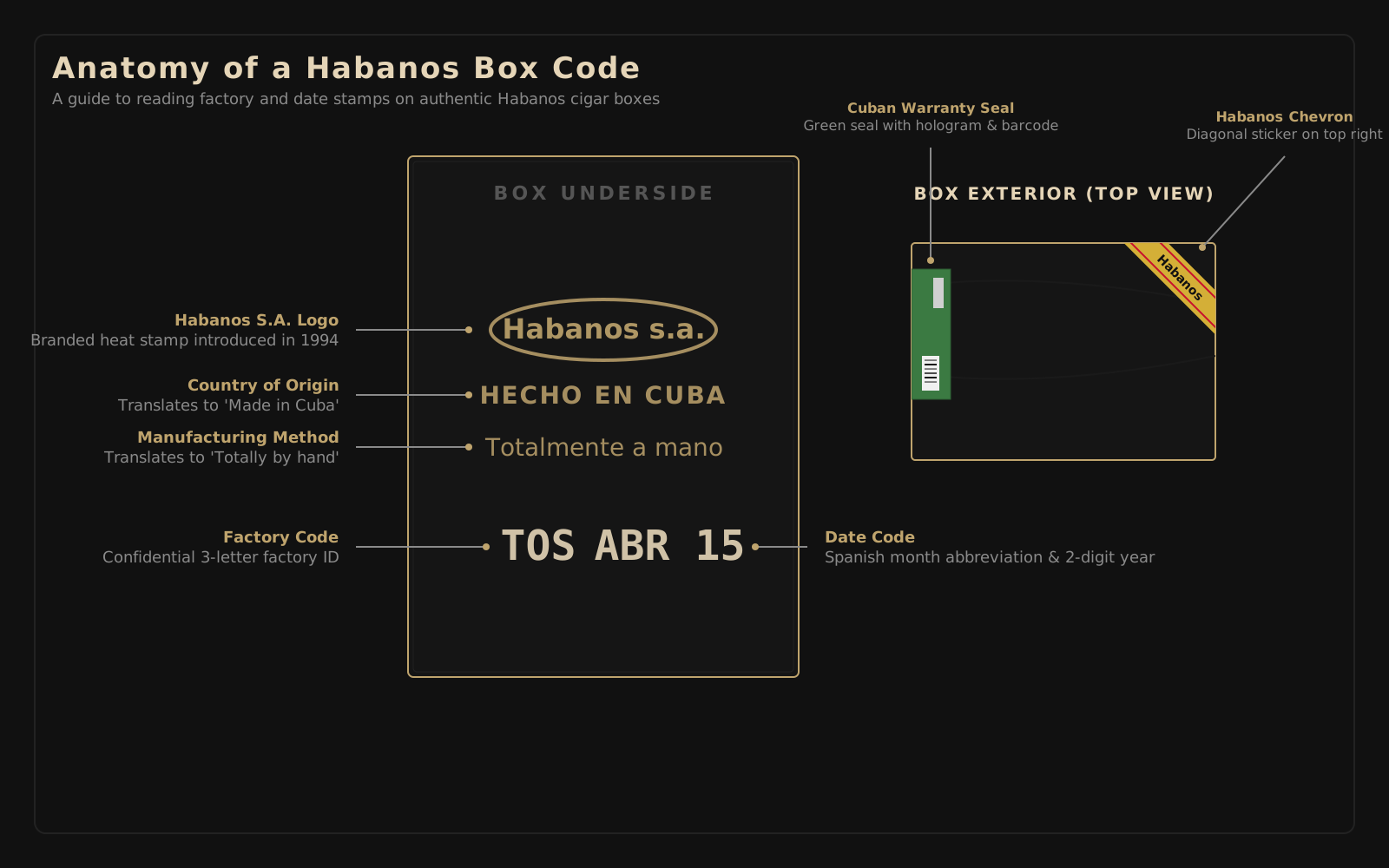
A diagram illustrating the anatomy of a Cuban cigar box code and date stamp
To age a cigar effectively, one must first know its starting point. Every authentic box of Habanos is stamped with a factory code and a packing date on the underside. Understanding this date is crucial for tracking a cigar's progress and planning its maturation.
The date stamp consists of a three-letter abbreviation for the month in Spanish, followed by a two-digit year. For example, 'ABR 23' denotes April 2023. This marks the moment the cigars were placed in the box, which serves as the baseline for the ageing process.
It is wise to familiarise yourself with our Cigar box code guide to read these dates accurately. If the stamp is missing, illegible, or appears manipulated, consult our advice on How to spot fake Cuban cigars to verify the box's provenance. When you buy English Market Selection (EMS) cigars from a specialist, this date provides the foundation for your collection strategy.
Short rest versus long-term ageing
It is important to distinguish between resting a cigar and ageing it. A short rest is typically applied to cigars that have just been purchased or shipped. Transit exposes cigars to fluctuations in temperature and humidity. Resting them in a stable humidor for 30 to 90 days allows the moisture content to normalise, ensuring a more even burn and a truer flavour profile.
Long-term ageing, however, refers to storing cigars for three, five, ten, or even twenty years. This practice aims to fundamentally alter and refine the profile of the blend over time. While most standard production Habanos are ready to smoke after a couple of years, extended maturation is pursued by collectors seeking exceptional smoothness and complexity.
Which blends benefit from extended maturation?
Not all cigars are destined for decades in the humidor. The capacity of a cigar to improve with age is largely determined by its blend. Cigars with a high proportion of robust, nutrient-dense ligero leaves possess the necessary oils to support long-term chemical changes.
Full-bodied marques like Partagás and Bolívar often require at least three to five years to shed their initial aggression, and they can continue to develop profoundly over ten to fifteen years. Medium-full options, such as the Cohiba Siglo line or Montecristo No. 2, also reward patience, usually finding their sweet spot between five and eight years.
Conversely, lighter, milder blends built primarily around seco and volado leaves, such as H. Upmann or Fonseca, may peak earlier. While they will still smooth out over a few years, excessively ageing a mild cigar can cause its delicate flavours to fade, rendering it flat and overly muted. Once a cigar is past its best, the oils have dried out or fully oxidised, and the vitality of the smoke cannot be recovered.
Ideal storage conditions: smoking versus ageing
The climate within your humidor must be tailored to your goals. The standard recommendation of 70% relative humidity (RH) at 21°C is often too warm and damp for long-term maturation in modern, centrally heated homes.
For cigars intended to be smoked in the near term, an RH between 68% and 72% at a temperature of 16°C to 18°C is optimal. However, for long-term ageing, a slightly drier, cooler environment is preferred. Maintaining an RH of 62% to 65% encourages slow, graceful maturation and significantly reduces the risk of mould or beetle hatching over the years.
Crucially, humidity is relative to temperature. Warmer air holds more moisture. To maintain the ideal absolute moisture content within the tobacco (approximately 13% by weight), the relative humidity must be adjusted downwards as the ambient temperature rises. The following table illustrates this relationship.
16°C (61°F) — Required Relative Humidity: 95%
18°C (64°F) — Required Relative Humidity: 84%
22°C (72°F) — Required Relative Humidity: 66%
24°C (75°F) — Required Relative Humidity: 59%
A precise digital hygrometer is essential to monitor these parameters. Ensure it is calibrated regularly using the salt method or a dedicated calibration kit.
Tracking your collection over time
Ageing is an active pursuit, not a passive one. The most rewarding aspect of buying cigars by the box is the ability to sample the progression of the blend as the years pass.
We recommend trying one cigar from a new box after its initial rest, and then sampling another every six to twelve months. This allows you to track the subtle shifts in aroma, strength, and complexity. Keeping detailed records is essential to understanding how different vitolas, such as the Robusto or the Churchill, respond to time in your specific conditions.
To assist with this, we advise using the digital Smoke Log in your profile. Recording the box date, the smoking date, and your tasting notes will help you identify the precise moment a particular box reaches its peak for your palate.
At MokaCigar
Careful curation is central to our philosophy. Every box that enters our London humidor is inspected for quality, and we take great care in managing our stock to ensure you receive Habanos in excellent condition. Whether you are seeking a fresh release to lay down for a decade or a vintage box ready to enjoy today, we invite you to browse our current shop inventory, all guaranteed authentic and bearing the EMS seal.