Dalias
The Dalias is a Cuban factory size most commonly recognised by collectors under its commercial name, the Lonsdale. Measuring 170 mm (6 ¾ inches) with a 43 ring gauge, this slender parejo requires careful construction to ensure an open draw. The slender format places significant emphasis on the wrapper leaf, concentrating the characteristics of the blend into a focused, precise profile.
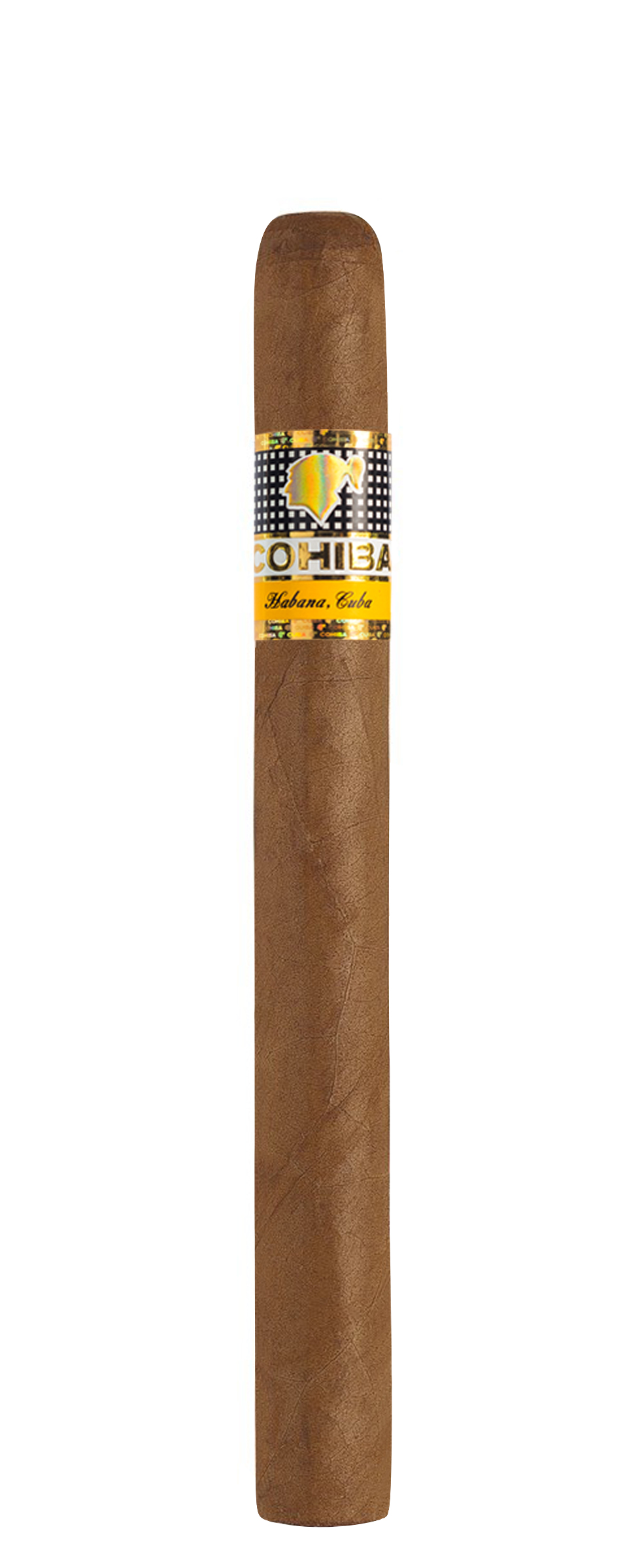
Cohiba Siglo V, rolled in the Dalias size
Factory Size Versus Commercial Name
In Cuban cigar manufacturing, a vitola is defined in two ways: the factory name and the market name. The *vitola de galera* (factory size) for this format is the Dalias, which dictates the exact dimensions the roller must achieve. The *vitola de salida* (commercial or market name) is what appears on the box, such as Lonsdale or 8-9-8. While different brands may use various commercial names, the physical dimensions of the Dalias remain constant across all houses.
Construction and Smoking Profile
A Dalias is a classic parejo, meaning it has straight, parallel sides and a rounded head. Due to its narrow 43 ring gauge and considerable length, rolling a Dalias requires a skilled *torcedor* to avoid bunching the filler leaves, which can restrict the draw. When crafted correctly, it provides an even, steady combustion.
The smoking time generally falls between 75 and 90 minutes. Because the ratio of wrapper to filler is high compared to thicker formats, the external leaf plays a dominant role in the flavour profile. Smokers often notice that a Dalias expresses the core characteristics of a brand with distinct clarity, allowing for subtle transitions as the cigar progresses.
Prominent Marcas
Several renowned houses utilise the Dalias format for their regular production lines. The most celebrated example is the Partagás 8-9-8, a cigar that has been in active production since 1975. Named after the arrangement of cigars in its varnished box (three rows of eight, nine, and eight), it offers the rich, earthy profile expected of the marca.
Another prominent example is the Cohiba Siglo V, introduced in 1994 as part of the Línea 1492. This cigar presents a lighter, more floral interpretation of the format, benefiting from the third fermentation process unique to the brand.
Comparison with Similar Formats
The Dalias is frequently compared to the Cervantes, which is the traditional factory size for a standard Lonsdale. While similar, a Cervantes measures 165 mm by a 42 ring gauge, making the Dalias slightly longer and marginally thicker. It is also slimmer than a Julieta No. 2 (Churchill), which sits at a 47 ring gauge, providing a more intense and directed smoke than its wider counterpart.
Ageing and Collecting Notes
Due to the concentration of flavours, a Dalias rewards careful ageing. Tannins in the wrapper and binder integrate smoothly over five to seven years, rounding out any sharp edges present in recent production. When acquiring boxes, always inspect the factory code and date stamp to track the maturation process.
Collectors in the UK should look for the EMS stamp as an indicator of proper importation. Maintaining a stable humidity of 65% is particularly important for slender formats, as over-humidification can swell the filler and tighten the draw. If in doubt regarding a vintage, always check the box code or consult our guide on spotting fakes to verify the provenance of older boxes.
Dalias Specifications
Galera Name — Detail: Dalias
Common Name — Detail: Lonsdale
Ring Gauge — Detail: 43
Length (mm) — Detail: 170 mm
Length (inches) — Detail: 6 ¾ inches
Shape — Detail: Parejo
Typical Smoking Time — Detail: 75–90 minutes
At MokaCigar
Our humidors periodically hold well-rested examples of the Dalias format. Notable appearances in our catalogue include the Partagas 8-9-8, alongside rare vintage singles such as the Bolivar Lonsdale 2001 and the Ramon Allones 8-9-8 Hunters & Frankau House Reserve 2001/2021. For current availability of this size, browse our inventory of Partagás and Cohiba.