Vuelta Abajo and the tobacco regions of Cuba
The terroir of Cuba, defined by its mineral-rich soils and microclimates, dictates the character of every handmade Habano. While tobacco grows throughout the island, the industry relies on five distinct regions, with the Vuelta Abajo at its apex. Understanding these geographical divisions allows collectors to appreciate the complex agricultural origins of their cigars.
How does terroir define a Habano?
Terroir in cigar making encompasses soil composition, sunlight, rainfall, temperature, and traditional farming techniques. In Cuba, these elements converge to create ideal conditions for the *Nicotiana tabacum* plant, yielding leaves with distinct concentrations of oils and minerals. A leaf grown in one province will express entirely different characteristics to the same seed planted elsewhere.
For a cigar to be classed as a Habano, it must be rolled in Cuba using tobacco grown on specific, protected plantations. The blending of these leaves is the responsibility of the *Ligador* (master blender), who relies on the consistent profile of each region to maintain the house style of brands such as Cohiba or Partagás. When a collector assesses a box, the agricultural provenance is as critical as the factory code stamped on the base.
The five tobacco regions of Cuba
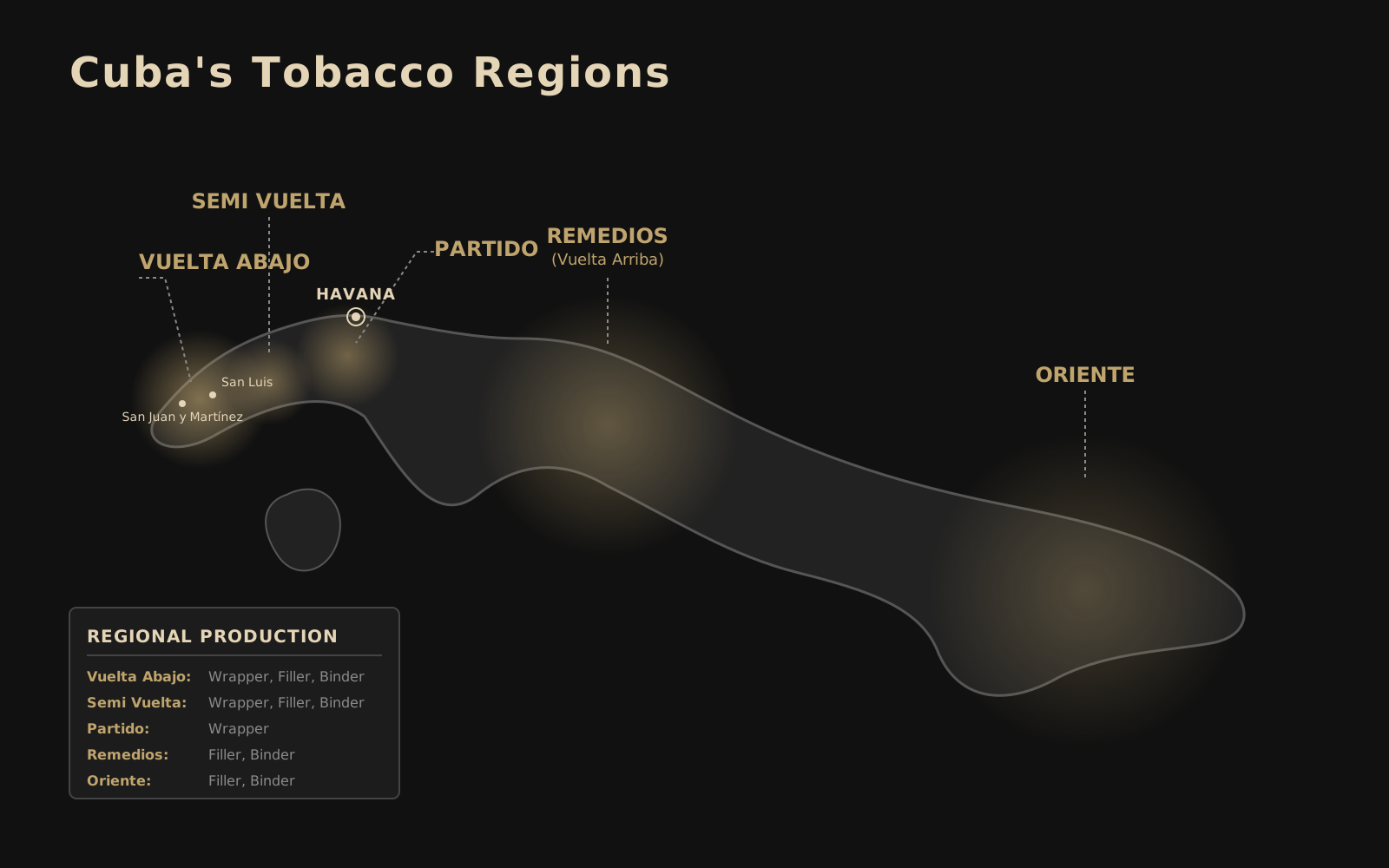
Map of the five Cuban tobacco regions
Cuba is divided into five distinct tobacco-producing zones, each serving a specific purpose within the national industry. The Denominación de Origen Protegida (DOP) strictly controls which areas may supply leaf for premium export cigars. Pinar del Río province in the west dominates production, hosting both the Vuelta Abajo and the Semi Vuelta.
Moving towards Havana, the Partido region specialises in specific leaf types for the premium market. Further east, Remedios and Oriente produce vast quantities of tobacco, though their output is largely directed towards different markets or domestic consumption. The interplay between these five regions sustains the entire Cuban tobacco economy.
Vuelta Abajo: The master terroir
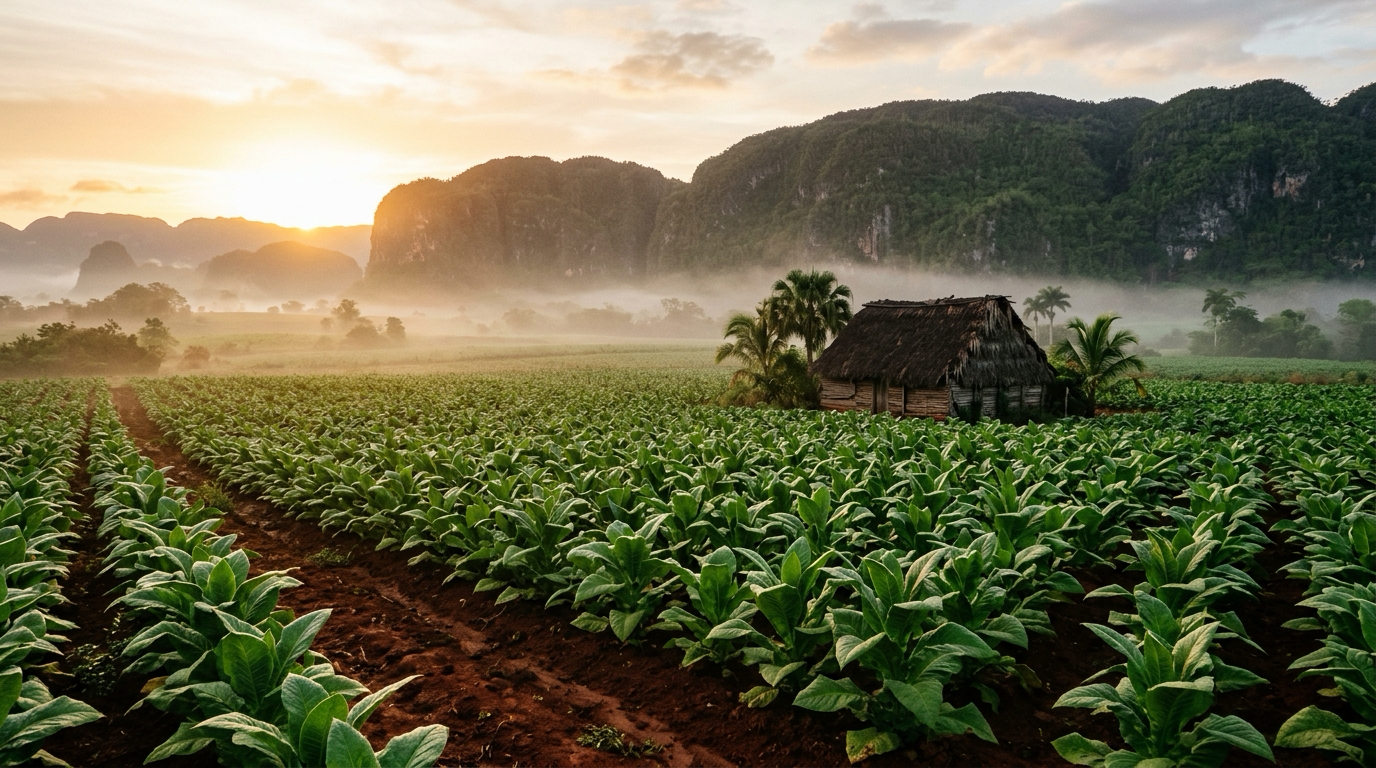
Dawn over a tobacco field in the Vuelta Abajo — Illustration, MokaCigar
Located in the far west of the island within the Pinar del Río province, the Vuelta Abajo is the most important tobacco-growing region in the world. It is the only area in Cuba capable of producing all three types of leaf required for a premium cigar: the wrapper, the binder, and the filler. The soil here is particularly rich in nitrates, imparting the signature strength and complex flavour profile associated with premium Habanos.
At the heart of the Vuelta Abajo lie two vital municipalities: San Juan y Martínez and San Luis. San Juan y Martínez is renowned for producing exceptional filler leaves, providing the structural foundation for robust blends. San Luis is famous for cultivating the finest wrapper leaves, prized for their elasticity and uniform colour. Plantations here have operated for generations, with their output reserved exclusively for the most prestigious global brands.
The distinction between these local microclimates is precise. Even within the Vuelta Abajo, a few miles can alter the mineral uptake of the plants, changing the burn rate and nicotine content. This agricultural precision allows factories in Havana to maintain consistent blends despite the natural variations of each harvest.
Partido, Remedios and the outer regions
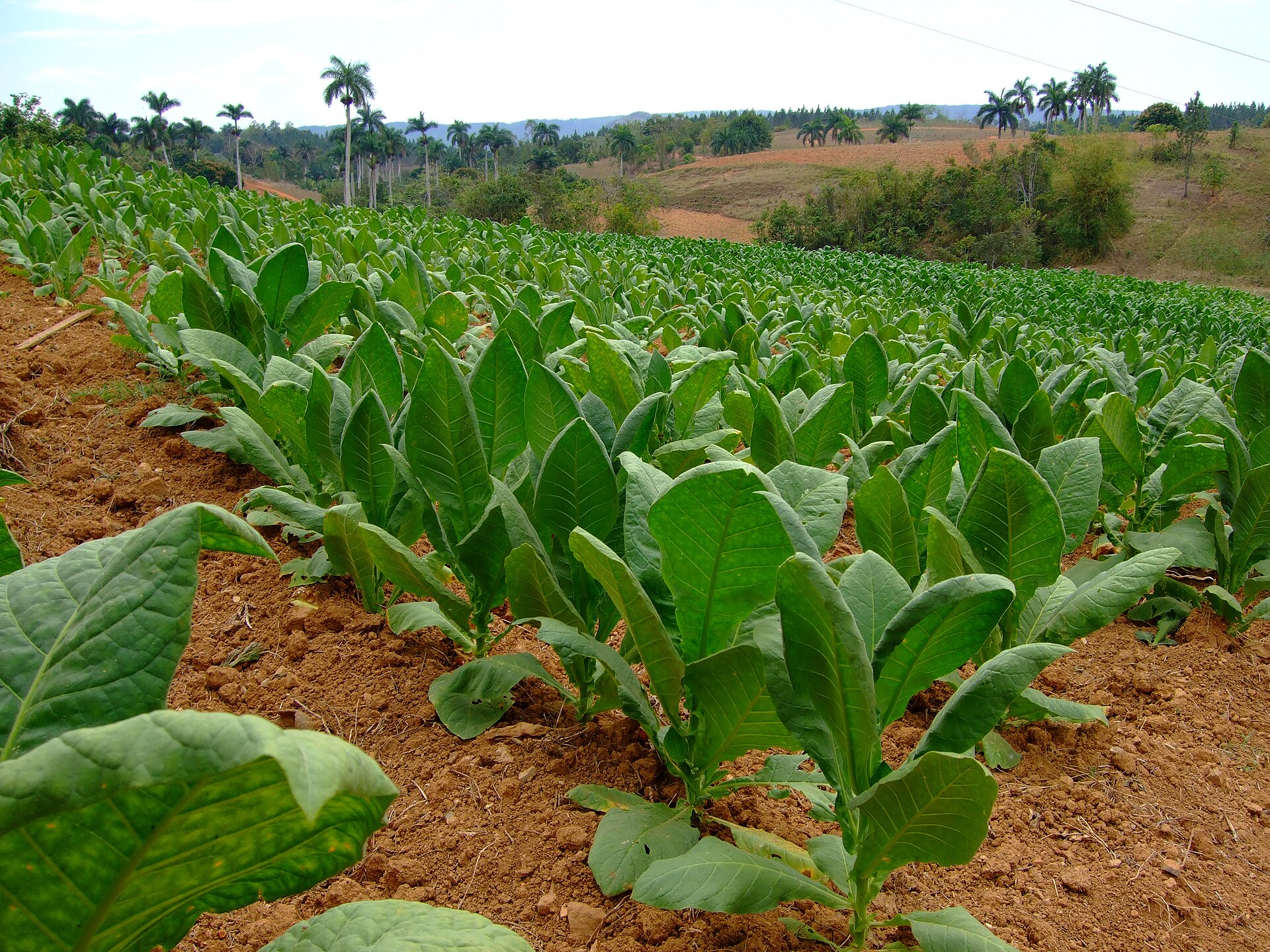
Tobacco fields near the town of Viñales — Photo: Arnoud Joris Maaswinkel · CC BY-SA 4.0
While the Vuelta Abajo provides the majority of premium leaf, the other regions remain essential to the broader industry. The Partido region, situated just outside Havana, was established in the early seventeenth century. Its soil and climate are uniquely suited to cultivating light-coloured wrapper leaves. These are grown under the shade of muslin cloths to protect them from direct sunlight.
The Semi Vuelta, located in the eastern part of Pinar del Río, produces robust, heavy leaves. Although a fraction of its output is used in export cigars, it is primarily known for producing seeds and tobacco for the domestic market. The soil here lacks the exact mineral balance of the Vuelta Abajo, resulting in a coarser leaf texture.
Further east lies Remedios, historically known as Vuelta Arriba. This is the oldest tobacco-producing region in Cuba, and it remains the exclusive source of leaf for the José L. Piedra brand. Finally, the Oriente region in the far east of the island produces lower-grade tobacco, almost entirely reserved for local cigarette production and non-export goods.
Soil, climate and the growing season
The Cuban tobacco growing season is brief and demanding, running primarily from November to February. This schedule deliberately avoids the intense heat and torrential rains of the Caribbean summer, which would overwhelm the delicate plants. The winter months provide the necessary balance of warm days, cool nights, and moderate humidity required for slow, steady maturation.
Soil preparation begins in late summer, with planting traditionally starting in October. As the plants mature, they are harvested in stages from the bottom up, allowing the upper leaves more time to absorb nutrients from the rich, reddish soil. Following the harvest, leaves are air-dried in wooden *casas de tabaco* to remove moisture before they enter the formal production chain.
The dried leaves then undergo a critical fermentation process, a chemical reaction that removes impurities and reduces acidity and nicotine. Certain prestigious brands demand additional steps; the tobacco used for Cohiba uniquely undergoes a third fermentation in wooden barrels. Afterwards, the central vein is removed during stripping, and the leaves are sorted by size, colour, and texture.
At the factory, rollers (*torcedores*) use a wooden board, a blade (*chaveta*), and vegetable glue to assemble the cigar *totalmente a mano*.
Vuelta Abajo — Primary Output: Wrappers, Binders, Fillers — Soil Characteristic: Nitrate-rich, sandy loam — Key Municipalities: San Luis, San Juan y Martínez
Partido — Primary Output: Wrappers — Soil Characteristic: Loam, good drainage — Key Municipalities: San Antonio de los Baños
Semi Vuelta — Primary Output: Seed nurseries, domestic leaf — Soil Characteristic: Heavier, clay-based — Key Municipalities: Consolación del Sur
Remedios — Primary Output: Short filler (export) — Soil Characteristic: Distinctive, rustic soil — Key Municipalities: Santa Clara, Sancti Spíritus
Oriente — Primary Output: Domestic consumption — Soil Characteristic: Variable, less nutrient-dense — Key Municipalities: Santiago de Cuba
Vegas Finas de Primera and protected status
Not all land in these regions is deemed suitable for premium tobacco. The Cuban agricultural authorities classify the finest plantations as *Vegas Finas de Primera* (First-Class Fields). Only tobacco grown on these specific, registered plots may be used in the production of handmade export Habanos.
This classification forms the basis of the Denominación de Origen Protegida. Similar to the strict controls placed on French wine or Scottish whisky, the DOP ensures that a cigar bearing the Habanos seal is genuinely a product of its stated terroir. Farms are regularly inspected, and land that degrades in quality can be stripped of its status.
For a plantation to achieve and maintain this rank, the farmers (*vegueros*) must adhere to traditional agricultural methods. Crop rotation is strictly enforced to prevent soil depletion, and the use of modern industrial fertilisers is carefully managed to avoid altering the natural chemical profile of the leaf.
Why Cuban seed behaves differently abroad
A common misconception is that planting Cuban seeds in foreign soil will yield a Cuban cigar. In reality, the *Nicotiana tabacum* plant is highly responsive to its environment. When seeds from the Vuelta Abajo are cultivated in the Dominican Republic, Nicaragua, or Honduras, the resulting leaf adapts to the new terroir, producing an entirely different flavour profile.
The specific mineral composition of the Pinar del Río soil, combined with the island's precise humidity and the angle of the winter sun, cannot be replicated. While other nations produce exceptional cigars, they cannot recreate the distinct twang, salinity, and musky complexity inherent to a true Habano.
This biological reality reinforces the value of authenticity. When verifying a box, understanding the origins of the tobacco is as important as checking the box code. Counterfeiters frequently use inferior leaf from the Dominican Republic or even the Cuban Oriente region, but the difference in terroir becomes immediately apparent upon lighting.
What terroir means when buying cigars
For the serious collector, terroir translates directly into box selection and aging potential. Tobacco is an agricultural product, vulnerable to annual fluctuations in rainfall and temperature. While factories blend across harvests to maintain consistency, a knowledgeable smoker will track vintage variations. A dry growing season in the Vuelta Abajo might produce smaller, more concentrated leaves, leading to a stronger, more tannic cigar that requires extended rest.
When sourcing cigars, collectors should consider the English Market Selection (EMS) standard. EMS guarantees that the cigars have been imported through official channels, stored in climate-controlled conditions, and visually inspected. Proper storage is vital; fluctuations in temperature or humidity will quickly degrade the volatile oils that the terroir worked so hard to produce.
Understanding the regions also aids in portfolio building. A collector seeking mild, elegant morning smokes in a classic *robusto* format might focus on brands reliant on Partido wrappers, such as Hoyo de Monterrey. Conversely, those preferring dense, aging-worthy blends will look toward houses deeply rooted in the Vuelta Abajo, like Partagás.
At MokaCigar
Every box that enters our London humidor is a direct product of the Cuban terroir, carrying the strict quality controls of the Habanos DOP and the EMS guarantee. We verify the provenance of all stock, ensuring our clients receive cigars grown precisely where they should be. To explore how the Vuelta Abajo expresses itself across different marques, from the lightest shade-grown wrappers to the densest filler blends, browse our curated selection of Habanos and consult our guide on how to spot fake Cuban cigars.