```
Inside a Havana cigar factory
A Havana cigar factory is a highly structured manufacturing environment where cured Cuban tobacco is graded, blended, rolled and aged by hand. These facilities operate on centuries-old methods, relying on human skill rather than mechanisation to produce Habanos. Understanding how they function provides collectors with essential context for assessing construction, consistency and provenance.
The great Havana factories and their houses
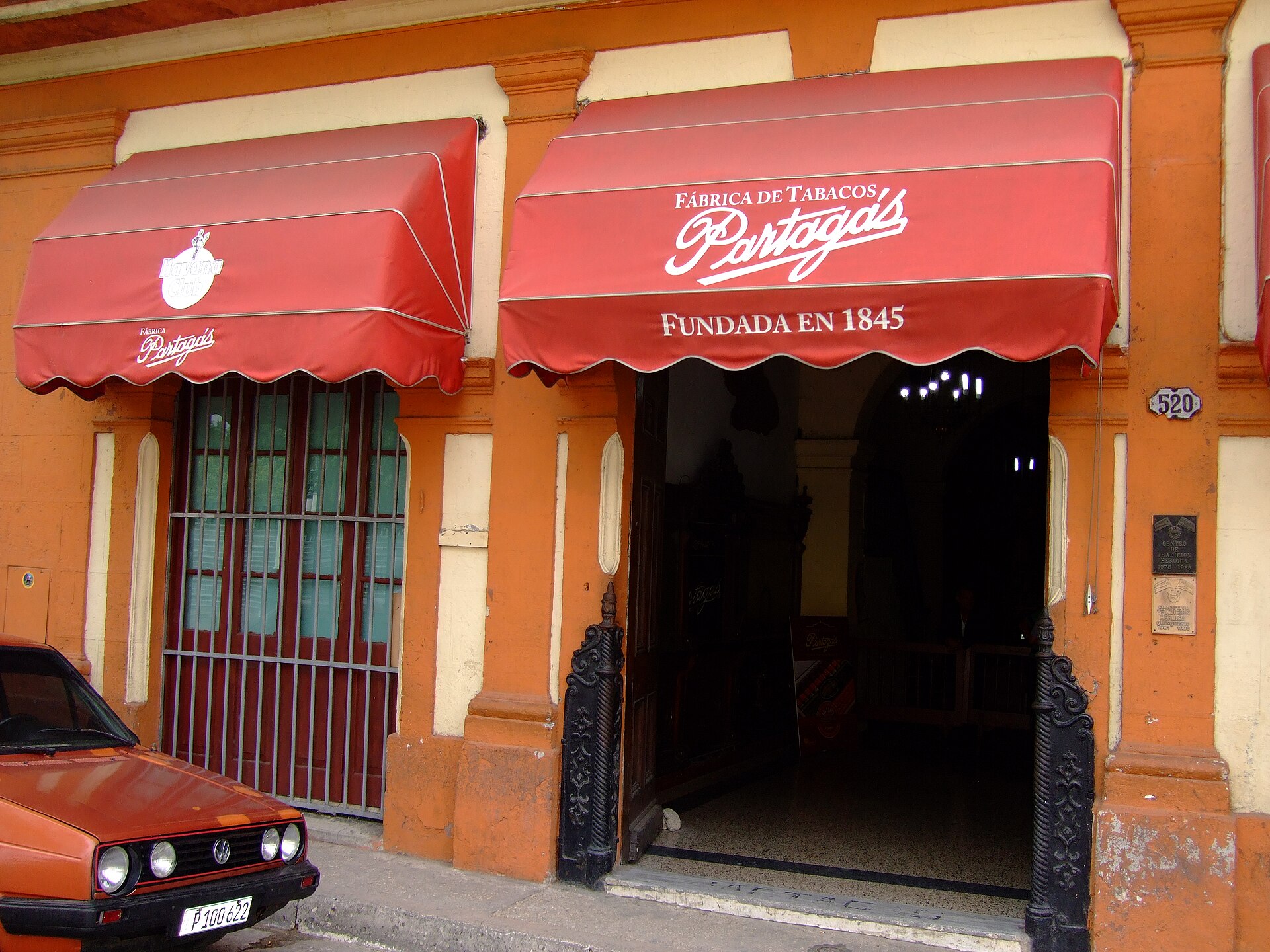
The Partagás factory, Havana — Photo: Arnoud Joris Maaswinkel · CC BY-SA 4.0
Havana has historically housed a concentrated number of cigar factories. El Laguito, situated in the Miramar district, is perhaps the most famous. Established in the nineteen-sixties as a school for female rollers, it is the spiritual home of Cohiba and Trinidad. The Partagás factory, known as Francisco Pérez Germán, is synonymous with full-bodied blends and operated for decades from its iconic building behind the Capitolio.
Other major facilities handle substantial production across various marques. The H. Upmann factory, officially named José Martí, and the La Corona factory, named Miguel Fernández Roig, are responsible for millions of cigars annually. The Romeo y Julieta factory operates under the name Briones Montoto. Each mother factory oversees blending and quality standards for their respective brands, even when production is allocated elsewhere.
It is a common misconception that all cigars of a certain brand are rolled in a single facility. In reality, production demands dictate that brands move between factories. A Partagás Serie D No. 4 might be rolled at the main factory or a provincial facility depending on the quota. Consequently, factory codes on boxes change regularly, underscoring the importance of a reliable cigar box code guide.
The production chain
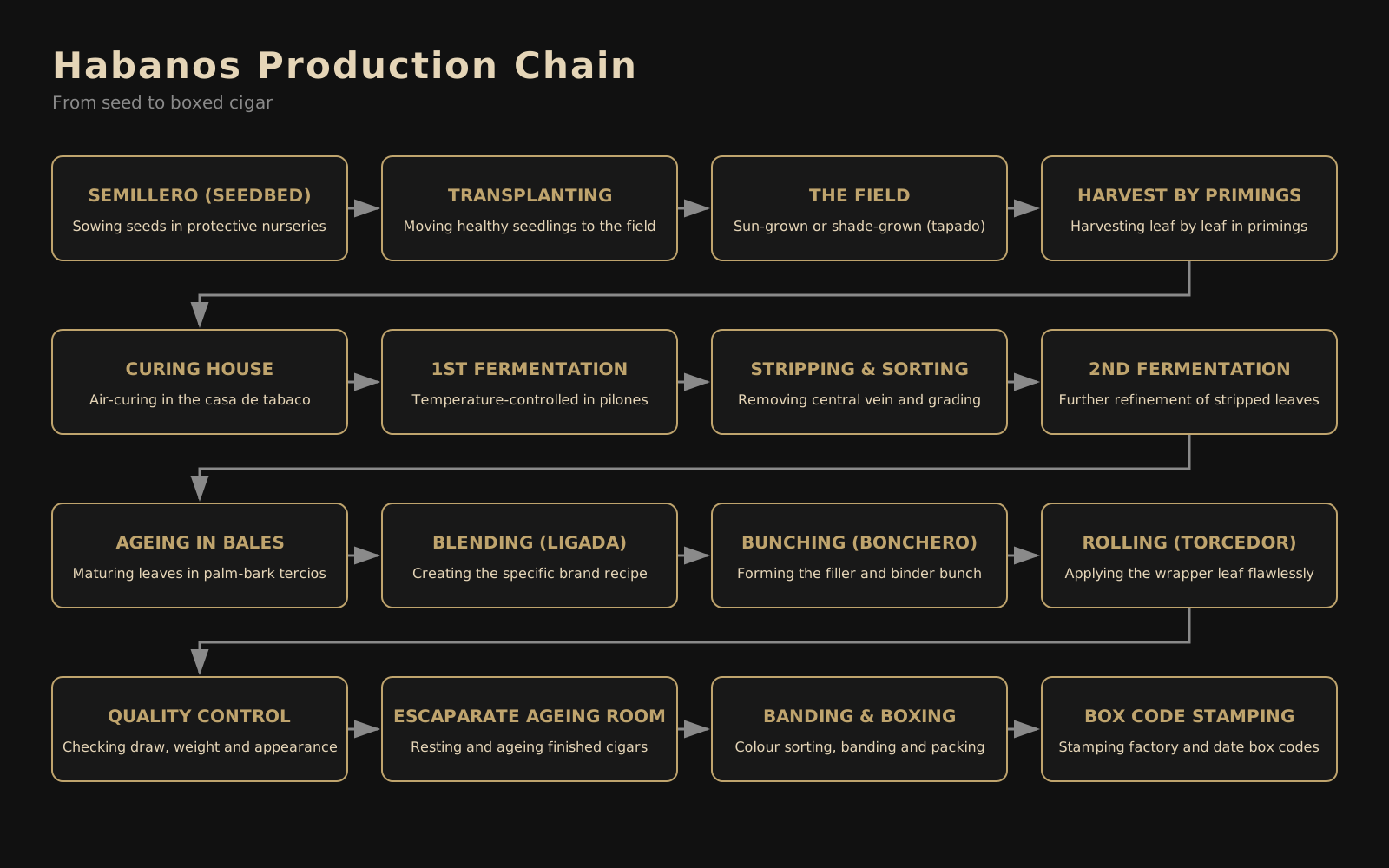
The production chain
Before tobacco reaches the rolling floor, it undergoes a strict sequence of treatments. Leaves are first air-dried in *casas de tabaco* to remove moisture, changing the leaf from green to brown. This is followed by fermentation, a chemical process that removes impurities, reduces acidity, and breaks down raw nicotine. Cohiba tobaccos undergo a distinct third fermentation in wooden barrels to refine their aroma.
Once fermented, the tobacco is aged in bales known as *tercios*. When ready for production, the leaves are moistened, and the thick central vein is removed by workers known as *despalilladoras*. Finally, the stripped leaves are sorted by size, colour and texture. This ensures that the rollers receive precisely the correct materials for the specific vitolas they are assigned to produce.
The galera and the roller's day
The core of any Havana factory is the *galera*, the large rolling room where the *torcedores* work. This room is typically vast, with rows of traditional wooden desks facing the front. A roller's day begins early when they collect their daily allocation of filler, binder and wrapper leaves from the blending department.
Rollers are graded by skill level, typically from category six to nine. Category six rollers handle simpler shapes, while category nine master rollers are entrusted with complex *figurados* and large formats. They must produce a set quota of cigars daily, which varies depending on the vitola's complexity. The atmosphere is quiet and focused, broken only by the rhythmic sound of cutting blades on wooden boards.
Bunching, rolling and the ligada
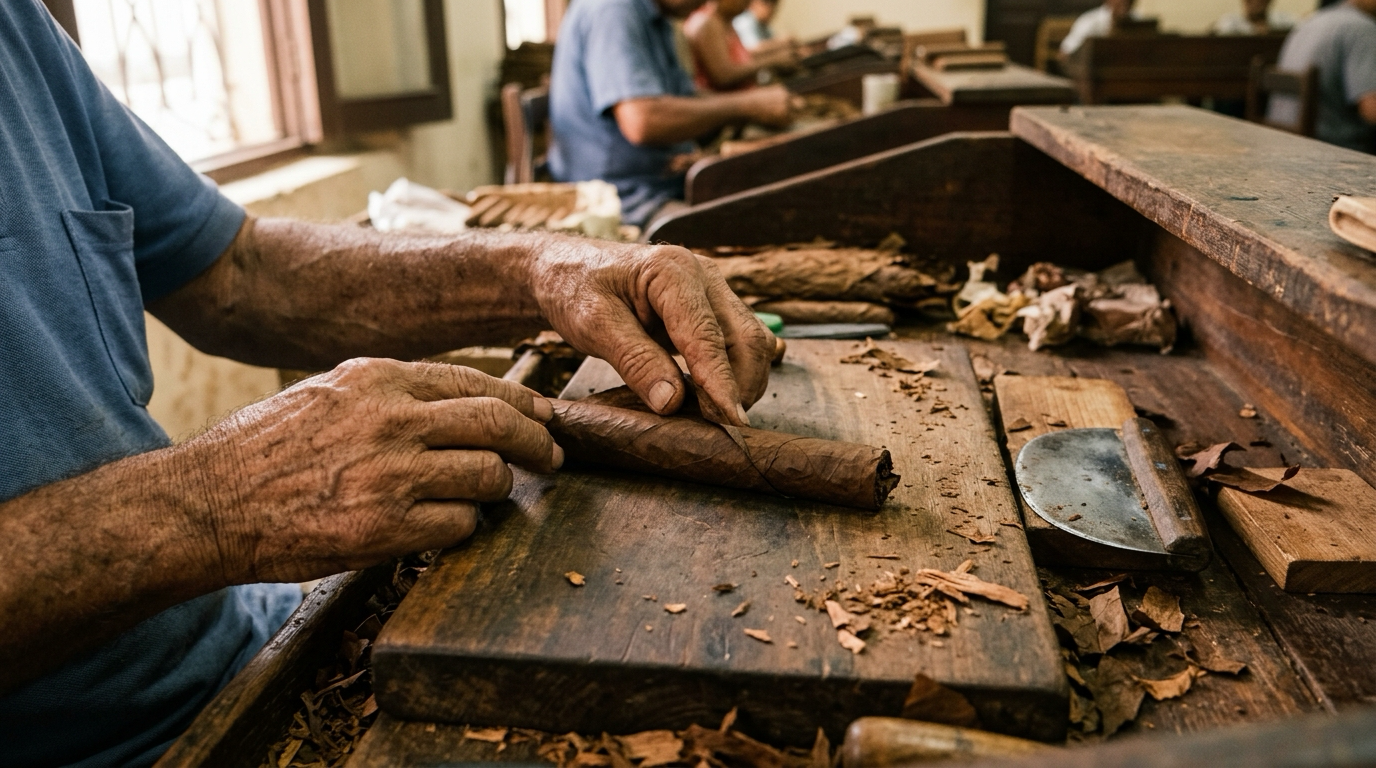
Rolling a wrapper (illustration) — Illustration, MokaCigar
Every Habano is constructed according to a specific *ligada*, or blend, dictated by the master blender. The roller begins by bunching the filler leaves. The strongest leaf (*ligero*) is placed in the centre, surrounded by the aromatic *seco* and the combustible *volado*. They fold the leaves carefully to ensure an even draw.
This bunch is wrapped in a binder leaf and placed into a wooden mould to set the shape. The final stage is the application of the wrapper leaf. The roller uses a semi-circular steel blade known as a *chaveta* to trim the wrapper to the precise curve required. They stretch the wrapper over the bunched tobacco, rolling it under tension for a smooth finish.
A small amount of odourless vegetable glue secures the leaf. Finally, a small disc of wrapper is cut to fashion the cap, sealing the head. This entirely manual process is designated *Totalmente a Mano*.
The tradition of the lector
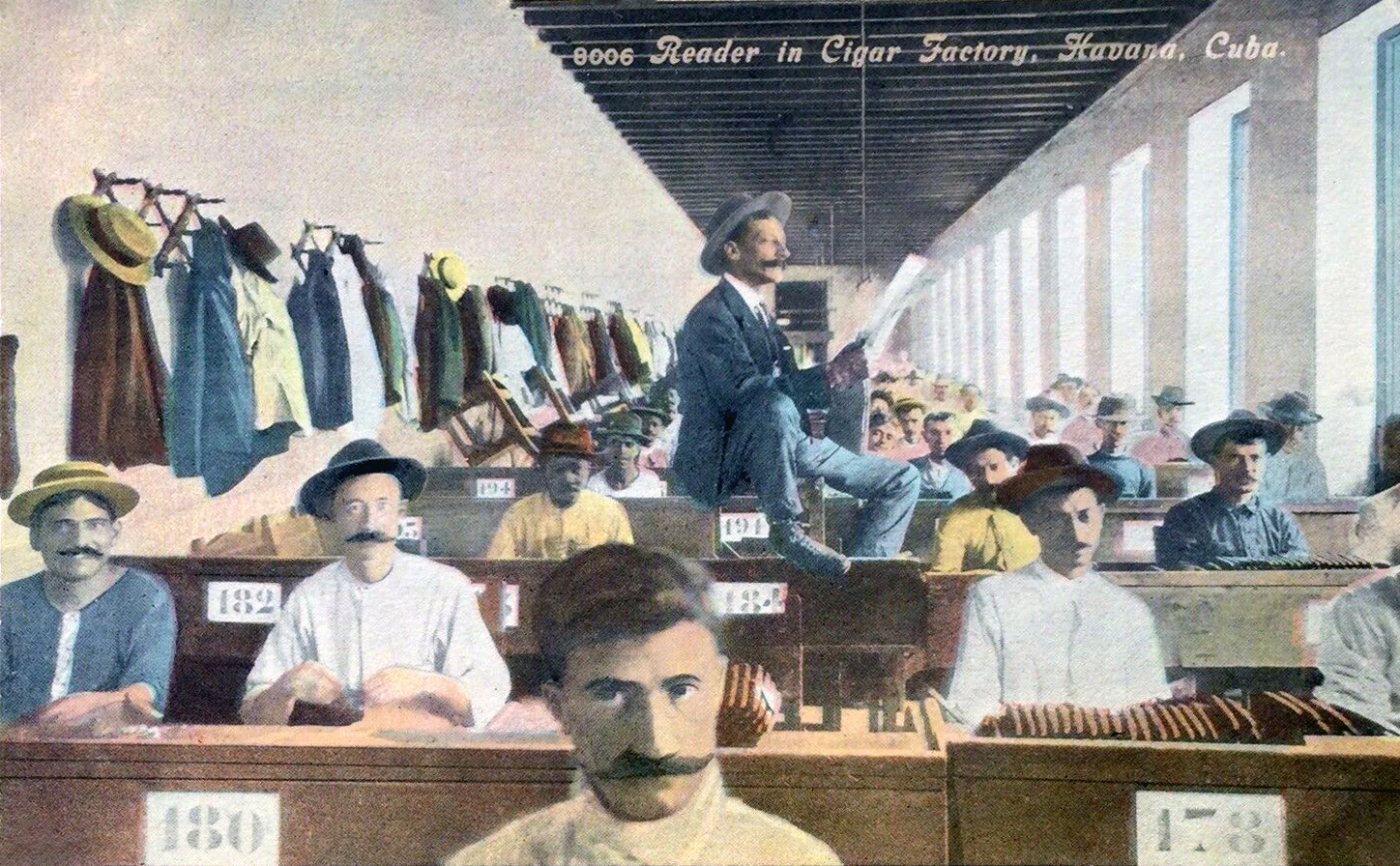
The lector reading to the galera — Photo: Harris Brothers, Havana (publisher) · Public domain
A defining feature of the Cuban *galera* is the presence of the *lector*, or reader. This tradition dates back to 1865, instituted to educate and entertain the rollers during their repetitive work. The lector sits on an elevated platform at the front of the room, reading aloud from a microphone. The rollers themselves contribute a portion of their wages to pay the lector's salary.
The morning reading typically consists of the daily newspaper, covering national news and factory announcements. In the afternoon, the lector moves to literature, reading novels selected by a vote among the workers. This practice is deeply ingrained in factory culture. It is the origin of brands such as Romeo y Julieta and Montecristo, named after the literary works favoured by the rollers.
Quality control, colour sorting and the escaparate
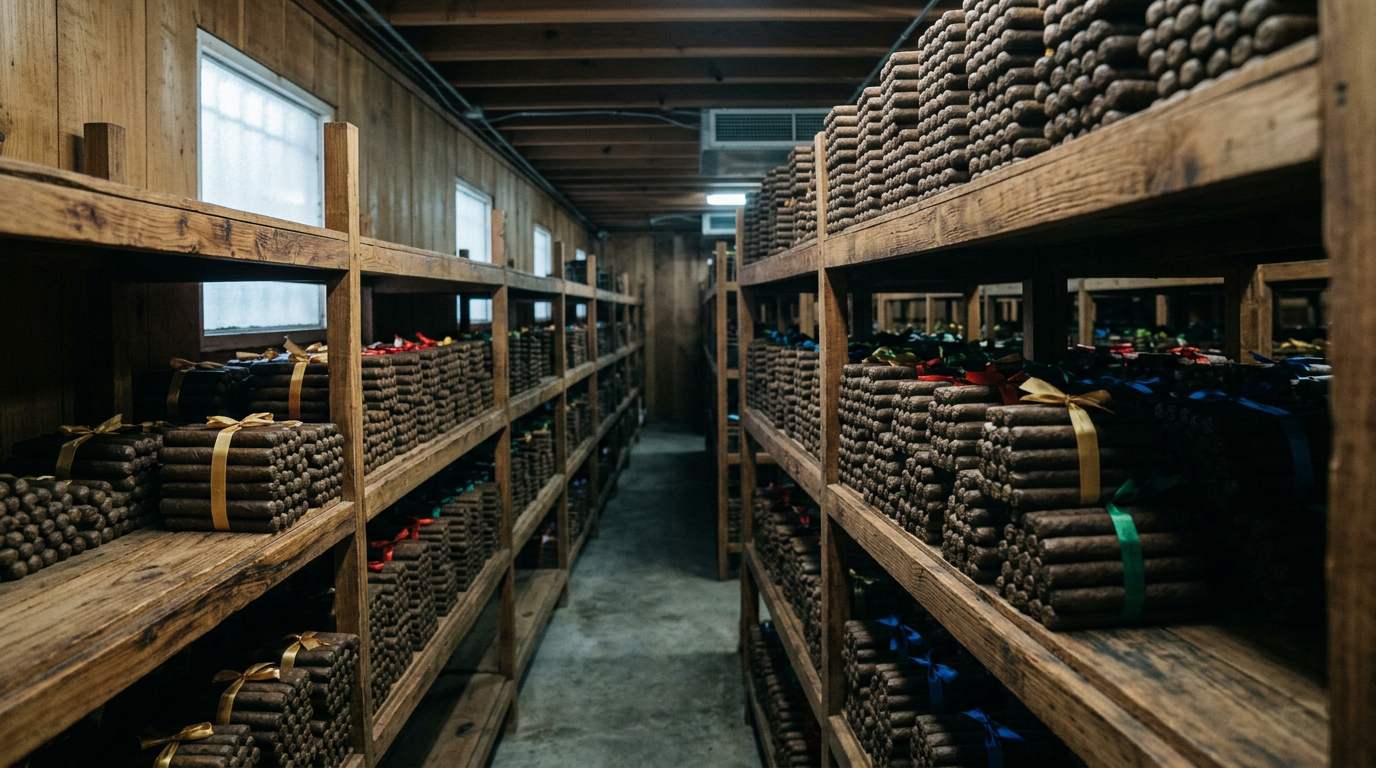
The ageing room (illustration) — Illustration, MokaCigar
Once rolled, the cigars enter a rigorous quality control phase. A percentage of each roller's output is tested on a draw-testing machine, which draws air through the unlit cigar to ensure it is not plugged. Cigars that fail are rejected, and the roller must adjust their technique. The finished cigars are then sent to the *escogida*, or colour sorting department.
In the *escogida*, workers group the cigars by minute variations in wrapper shade. The goal is to ensure every cigar in a single box presents a uniform appearance, graduating from the darkest wrapper on the left to the lightest on the right. After sorting, the cigars are transferred to the *escaparate*, a climate-controlled cedar room. Here, they rest for several weeks to allow moisture levels to stabilise and the tobaccos to marry.
Banding, boxing and factory variation
After resting in the *escaparate*, the cigars are banded and boxed. The bands are applied by hand, ensuring the logo is perfectly aligned. For dress boxes, the cigars are gently pressed into shape, covered with a protective paper flap, and sealed. The factory code and date stamp are then applied to the base, a crucial detail for identifying an English Market Selection release.
Collectors note that the same vitola can exhibit slight variations depending on which factory produced it. Differences in ambient humidity, specific wrapper crops, and the subtle nuances of different *galeras* influence the final product. A robusto rolled in Havana may smoke slightly differently from one rolled in a provincial factory. This reality of artisanal production makes spotting fake Cuban cigars a matter of careful attention to detail.
Reference table of major vitolas
The *galera* produces dozens of different shapes and sizes, known as vitolas. The reference table below outlines the most common factory formats alongside their commercial names and specifications.
Mareva — Common Name: Petit Corona — Ring Gauge: 42 — Length (mm): 129 — Notable Example: Montecristo No. 4
Robusto — Common Name: Robusto — Ring Gauge: 50 — Length (mm): 124 — Notable Example: Partagás Serie D No. 4
Julieta No. 2 — Common Name: Churchill — Ring Gauge: 47 — Length (mm): 178 — Notable Example: Romeo y Julieta Churchill
Prominente — Common Name: Double Corona — Ring Gauge: 49 — Length (mm): 194 — Notable Example: Hoyo de Monterrey Double Corona
Pirámide — Common Name: Torpedo/Pyramid — Ring Gauge: 52 — Length (mm): 156 — Notable Example: Montecristo No. 2
Laguito No. 1 — Common Name: Lancero — Ring Gauge: 38 — Length (mm): 192 — Notable Example: Cohiba Lancero
Cañonazo — Common Name: Siglo VI — Ring Gauge: 52 — Length (mm): 150 — Notable Example: Cohiba Siglo VI
At MokaCigar
Every box of Habanos that enters our humidor is inspected for construction, wrapper quality, and the correct factory and date codes. We maintain precise records of the stock we receive, ensuring that our clients are supplied with authentic, well-constructed cigars that are ready for immediate smoking or long-term ageing. To explore our current inventory of verified Havana cigars, please visit the shop.