```
Reading a Habanos box: seals, bands and codes
A Habanos box is a secured container that carries specific, verifiable markings proving its origin in Cuba and its transit to the retailer. By reading the warranty seals, factory stamps, and distributor marks, collectors can date their cigars, trace their provenance, and verify their authenticity. Understanding these elements is an essential skill for anyone acquiring fine cigars, whether purchasing new stock or evaluating aged pieces for a collection.
The Republic of Cuba warranty seal
The most prominent mark on any genuine box of Cuban cigars is the green Republic of Cuba warranty seal. This label is affixed to the left edge of the box, wrapping from the top to the front panel. It was first introduced by the Cuban government in 1889 to protect the national industry and has undergone several revisions since then. The seal serves as the primary visual guarantee that the cigars were rolled in Cuba and legally exported.
Modern seals incorporate advanced security features, including a micro-printed serial number, a hidden watermark, and a holographic band running down the right side. Under an ultraviolet light, a hidden coat of arms becomes visible in the centre of the paper. The barcode on this seal can be checked against the Habanos database, although collectors should note that counterfeiters often clone valid barcodes. For this reason, the seal must always be assessed in conjunction with other marks on the box.
When inspecting a seal, pay attention to its placement. It should fold over the edge cleanly, adhering firmly to the wood or paper without peeling. The paper stock itself is specific and difficult to replicate exactly, feeling slightly textured to the touch. We examine these seals under magnification to ensure the micro-printing remains sharp and the holographic elements display the correct depth and colour transitions.
The Habanos chevron and corner stickers
In addition to the national warranty seal, a diagonal sticker is placed on the top right corner of the box. This label, featuring the Habanos S.A. chevron and the word 'Habanos', signifies that the cigars were exported by the official state monopoly. The sticker is applied cleanly, with the corners securely adhered, and wraps neatly around the corner of the lid.
Depending on the region, you may also find a health warning or regional distributor seal covering parts of the box. However, the Habanos chevron and the green warranty seal are universal requirements for all exports. If either is missing, or looks like a low-resolution photocopy, the box requires intense scrutiny. On slide-lid boxes, the placement is similar, but the labels must be cut when the lid is first opened.
Decoding the factory and date stamp
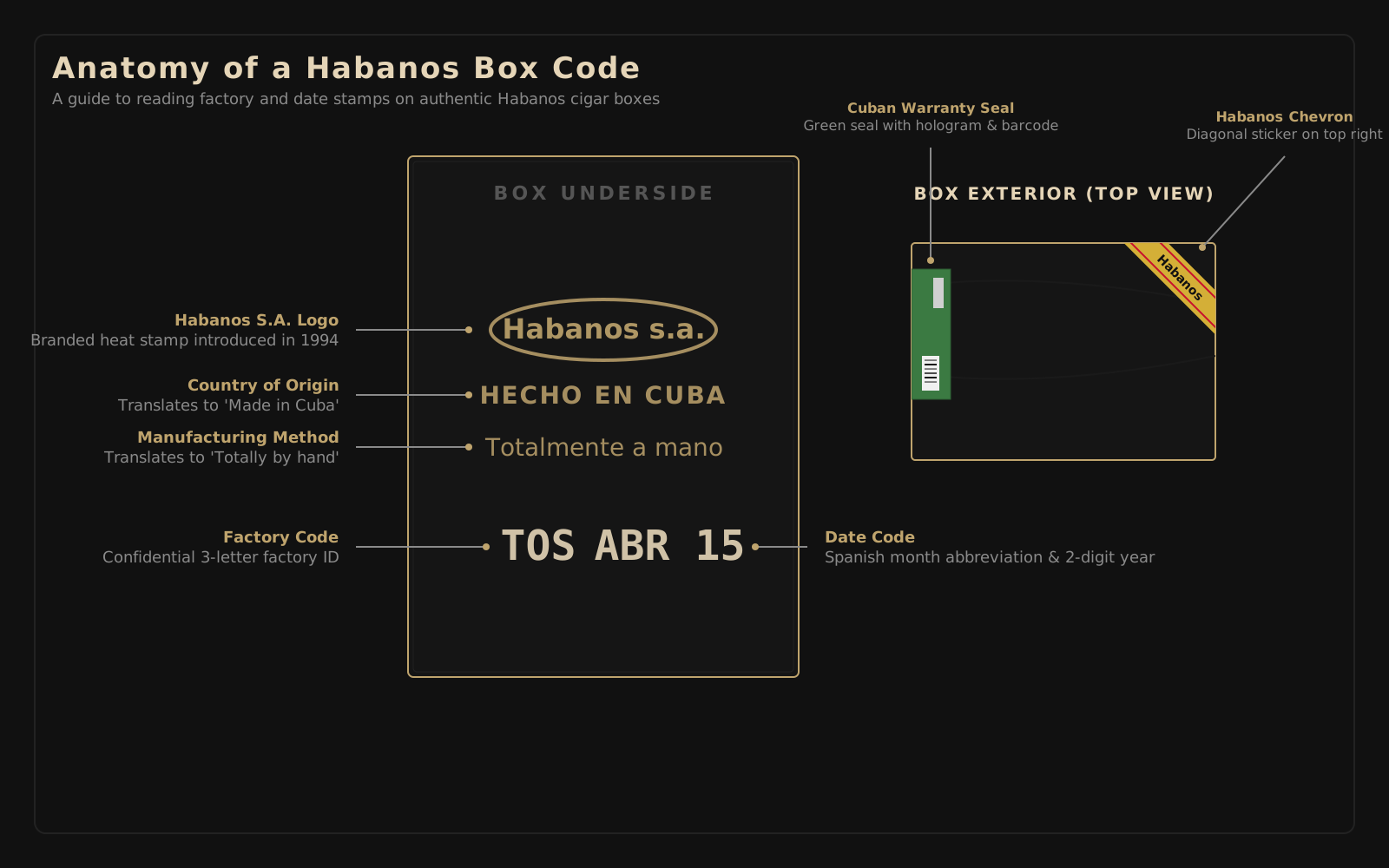
Box code anatomy diagram showing factory and date placement
Turn any authentic box over, and you will find an ink stamp on the wooden base. This is the factory and date stamp, a vital piece of information for any collector managing their humidor. It tells you exactly when the cigars were boxed and which facility rolled them, providing a clear timeline for the ageing process.
The top line is an alphanumeric code denoting the specific factory in Cuba. These codes change periodically to prevent counterfeiters from consistently matching the correct factory to a specific brand. MokaCigar maintains a log of these codes to cross-reference with the brands they are known to produce at any given time. For more detail, you can read our cigar box code guide.
The bottom line gives the date of boxing. It uses a three-letter Spanish abbreviation for the month, followed by a two-digit year. The stamp is always applied with ink directly onto the wood or paper; it is never a printed adhesive label. The ink can sometimes be faint or slightly smudged due to the manual stamping process, but it should remain legible to the trained eye.
Spanish month abbreviations
To determine the age of your cigars, use this translation of the standard date abbreviations found on the base of the box.
ENE — Spanish Month: Enero — English Translation: January
FEB — Spanish Month: Febrero — English Translation: February
MAR — Spanish Month: Marzo — English Translation: March
ABR — Spanish Month: Abril — English Translation: April
MAY — Spanish Month: Mayo — English Translation: May
JUN — Spanish Month: Junio — English Translation: June
JUL — Spanish Month: Julio — English Translation: July
AGO — Spanish Month: Agosto — English Translation: August
SEP — Spanish Month: Septiembre — English Translation: September
OCT — Spanish Month: Octubre — English Translation: October
NOV — Spanish Month: Noviembre — English Translation: November
DIC — Spanish Month: Diciembre — English Translation: December
Dress boxes, slide-lid boxes and cabinets
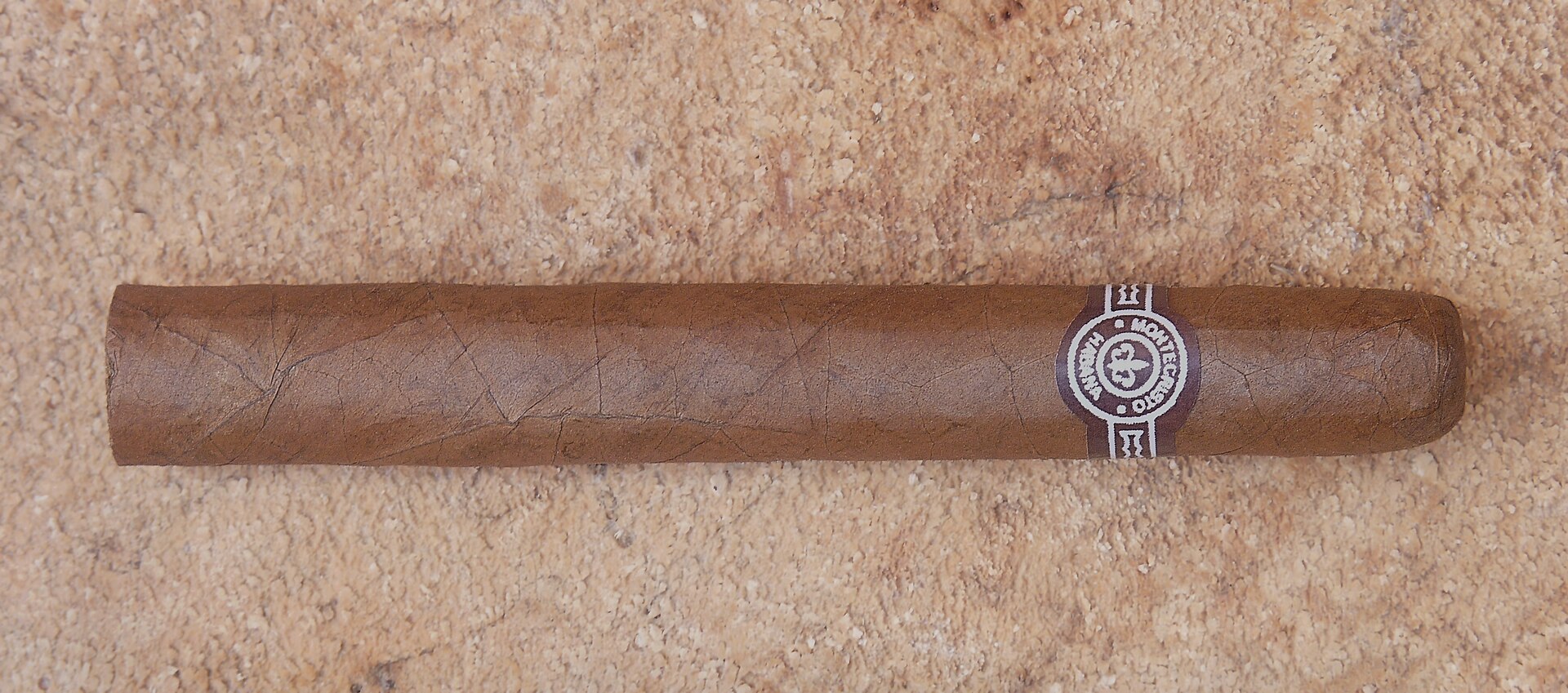
A standard Montecristo dress box showing paper construction — Photo: Jamain · CC BY-SA 3.0
The physical construction of the box itself offers clues to its contents and history. The most common format is the standard dress box, constructed from cedar or plywood and tightly covered in printed paper displaying the brand's livery. These boxes are nailed shut and feature a clasp on the front, with paper hinges securing the lid.
Slide-lid boxes (SLB) and cabinets are unvarnished cedar containers. An SLB typically holds 25 or 50 cigars, often tied in a ribbon bundle, with a wooden lid that slides into grooves. Cabinets are similar but often feature a hinged door or lid. These wooden presentations allow for excellent air exchange, making them highly desirable for long-term ageing in a stable environment.
The choice of packaging affects how the cigars mature. Cigars in a dress box, pressed tightly against one another in two layers, tend to age more slowly due to reduced airflow. Those bundled in an SLB benefit from cedar contact and uniform air circulation. Knowing the correct packaging format for a specific vitola is also an authenticity check; if a vitola is only officially released in an SLB, a dress box version is incorrect.
The English Market Selection (EMS) stamp
For collectors in the United Kingdom, the English Market Selection (EMS) stamp is a key indicator of provenance. This mark is applied by Hunters & Frankau, the exclusive distributor for Habanos in the UK, to certify that the cigars have entered the country through official channels. It confirms that the boxes have passed their quality inspection and that all UK duties have been paid.
The EMS designation has a long history, originally separating premium cigars destined for the discerning British market from those sent elsewhere. Today, it serves as a robust guarantee of authenticity and quality control. The stamp changes colour every year and includes a hidden date code to prevent forgery, making it a reliable reference point for collectors.
When purchasing from MokaCigar, you will see the current EMS stamp on our standard stock. Boxes acquired on the secondary market or aged stock will carry the stamp from their respective year of import. If a box claims to be UK retail stock but lacks an EMS stamp, its history is unclear and warrants further investigation.
Examining the bands
The paper bands placed around the cigars are another crucial verification point. While the box seals provide the macro view, the bands require micro-inspection. Authentic bands are produced using high-quality printing techniques, including sharp embossing, metallic foils, and precise die-cutting. Many premium brands now also incorporate complex holographic elements that are exceptionally difficult to duplicate.
Counterfeiters frequently struggle to replicate the exact alignment, colour saturation, and texture of genuine bands. Common errors include flat printing where there should be embossing, blurry edges on intricate crests, and incorrect shades of gold or red. For instance, the gold lettering on a genuine band is often highly reflective and slightly raised, whereas a fake may use flat, dull yellow ink.
We recommend comparing bands against known authentic examples under good lighting. Pay attention to how the band overlaps and the quality of the paper stock. For a deeper look at these details, consult our guide on how to spot fake Cuban cigars. Examining the bands closely remains a fundamental step in confirming the contents of any Habanos box.
At MokaCigar
Verifying a Habanos box is a rigorous process that ensures the integrity of every cigar we place in our humidors. Our team examines the factory codes, inspects the green warranty seals, and checks the EMS markings on all relevant stock to guarantee provenance before it reaches your collection. Whether you are looking for an aged cabinet or a standard dress box, you can explore our verified inventory in the MokaCigar shop.