```
From seed to leaf: how Cuban tobacco is grown
The cultivation of Cuban tobacco is an agricultural discipline that spans months of field labour followed by years of precise curing, fermentation and ageing. It transforms a microscopic seed into the complex wrapper, binder and filler leaves required for a premium Habano. This cycle relies entirely on the climate and soil of Pinar del Río, specifically the Vuelta Abajo region, which remains the sole terroir capable of producing all five leaf types used in Cuban cigar production.
The seedbed and the soil
The process begins in the *semilleros*, or seedbeds, usually during the late summer months. Tobacco seeds are astonishingly small; a single flower can produce thousands of seeds, which are sown carefully in protected nurseries. The soil here is often treated to ensure it provides the ideal nutrient balance for young plants. For around 45 days, the seedlings are nurtured and monitored closely until they reach a height of approximately 15 centimetres.
Once the seedlings are robust enough, they are transplanted to the main plantations, known as *vegas*. The finest fields, the *Vegas Finas de Primera*, are located in the Vuelta Abajo municipalities of San Juan y Martínez and San Luis. Traditional agricultural methods remain prevalent, with oxen frequently used to plough the land to avoid compacting the delicate soil. Here, the unique mineral composition of the earth imparts the distinct character found in all authentic Habanos.
Sun-grown and shade-grown cultivation
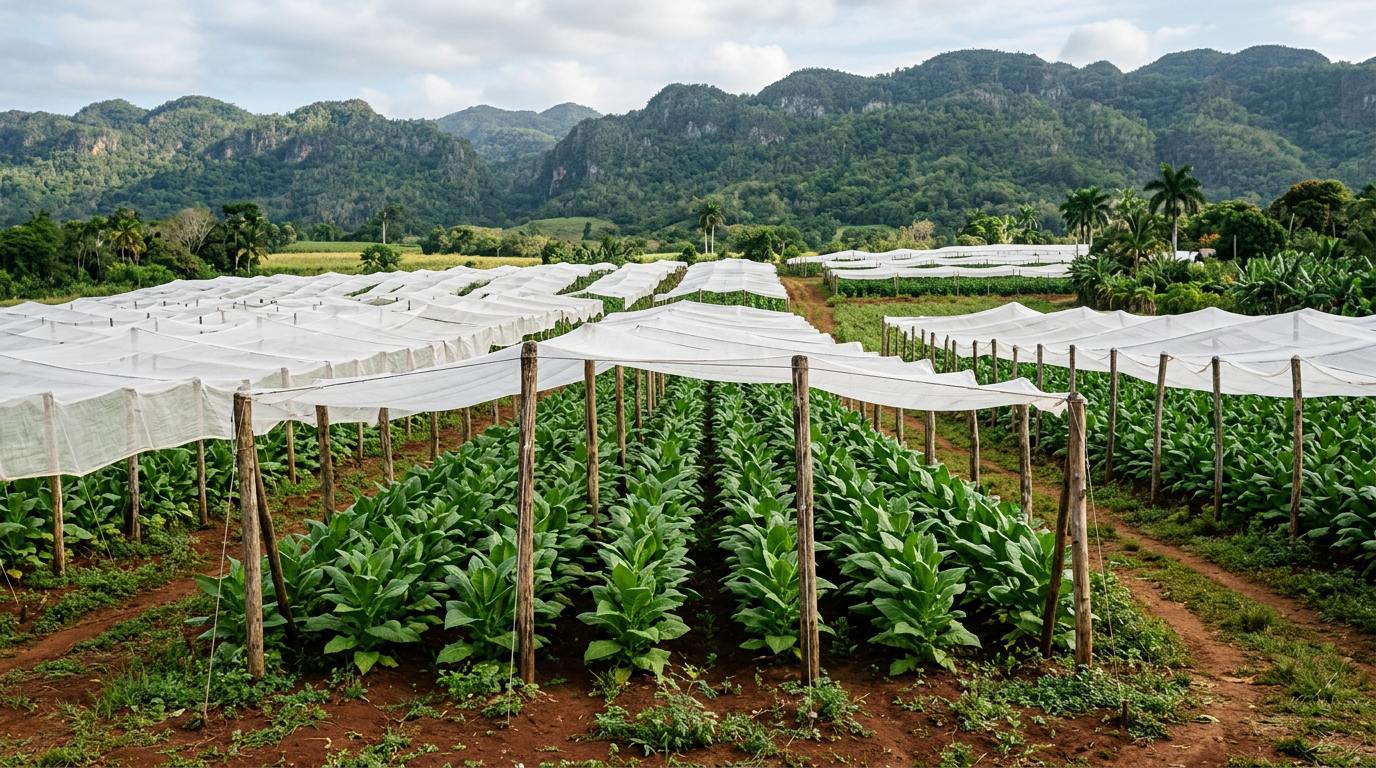
Shade-grown tobacco under cloth — Illustration, MokaCigar
Cuban tobacco is cultivated using two distinct methods, depending on the intended use of the leaf. Tobacco destined for the filler (*tripa*) and binder (*capote*) is grown in the open sun, known as *tabaco de sol*. The direct sunlight causes the plant to develop thicker, more robust leaves with concentrated oils and complex flavours. This sun exposure is critical for building the strength and aromatic properties of the internal blend.
Conversely, leaves intended for the wrapper (*capa*) are grown as *tabaco tapado*, or shade-grown tobacco. The entire field is covered in a canopy of fine muslin cloth, which creates a controlled microclimate. This filters the harsh sunlight, forcing the leaves to grow larger and thinner as they stretch to absorb the limited light. The resulting wrapper leaf is elastic, smooth and fine-veined, perfectly suited for the exterior of a cigar.
The primings: understanding the anatomy of the plant
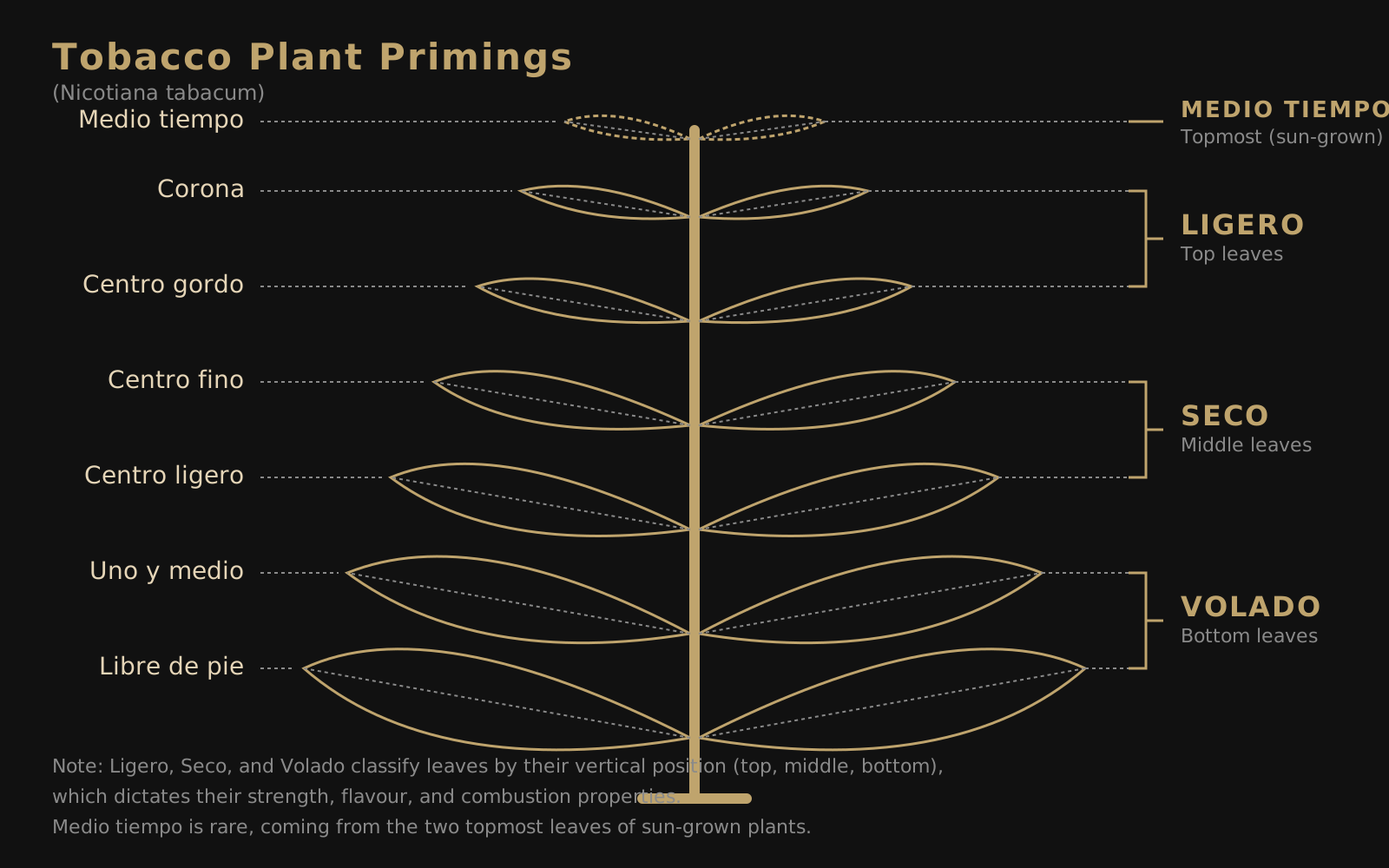
Leaf positions on the plant
A tobacco plant is harvested in stages from the bottom to the top, as leaves mature at different rates. These stages, or primings, dictate the physical characteristics and final purpose of the leaf within the cigar blend. The precise position on the stalk determines the leaf's strength, aroma and combustibility.
The lowest leaves are the *volado*. They receive the least sunlight and are the thinnest of the sun-grown leaves. Their primary role in a cigar is to ensure an even and consistent burn, providing the combustible base for the blend. Moving up the stalk, we find the *seco* leaves. These are of medium thickness and are responsible for delivering the bulk of the cigar's aroma and lighter flavour notes.
Near the top of the plant are the *ligero* leaves. Having received the most sunlight, they are thick, rich in oils and provide the strength and core depth of the blend. Occasionally, on the very apex of the plant, two small leaves known as *medio tiempo* are harvested. These are exceptionally strong and are used sparingly in specific, full-bodied releases, such as the Cohiba Behike.
Capa — Position on Plant: Various (sorted by size) — Cultivation Method: Shade-grown (*tapado*) — Primary Purpose: Wrapper (appearance) — Average Maturation: 40-50 days
Volado — Position on Plant: Bottom — Cultivation Method: Sun-grown (*sol*) — Primary Purpose: Filler (combustibility) — Average Maturation: 45-50 days
Seco — Position on Plant: Middle — Cultivation Method: Sun-grown (*sol*) — Primary Purpose: Filler (aroma) — Average Maturation: 50-60 days
Ligero — Position on Plant: Top — Cultivation Method: Sun-grown (*sol*) — Primary Purpose: Filler (strength) — Average Maturation: 60-70 days
Medio Tiempo — Position on Plant: Very Top (rare) — Cultivation Method: Sun-grown (*sol*) — Primary Purpose: Filler (extreme strength) — Average Maturation: 70+ days
The careful harvest
Harvesting a Cuban tobacco field is a painstaking and methodical process. The leaves are picked individually by hand, starting from the bottom of the plant. A few leaves are taken from each plant every few days, allowing the remaining upper leaves further time to mature in the sun. This ensures each leaf reaches its optimum state before removal.
This gradual harvest means a single field may take around 30 days to clear entirely. Each harvested leaf is carefully stacked over the arm of the farmer and transported to the curing house. Great care is taken to ensure the leaves are not bruised or torn, as physical damage can render a wrapper leaf useless for rolling.
Air-curing in the casa de tabaco
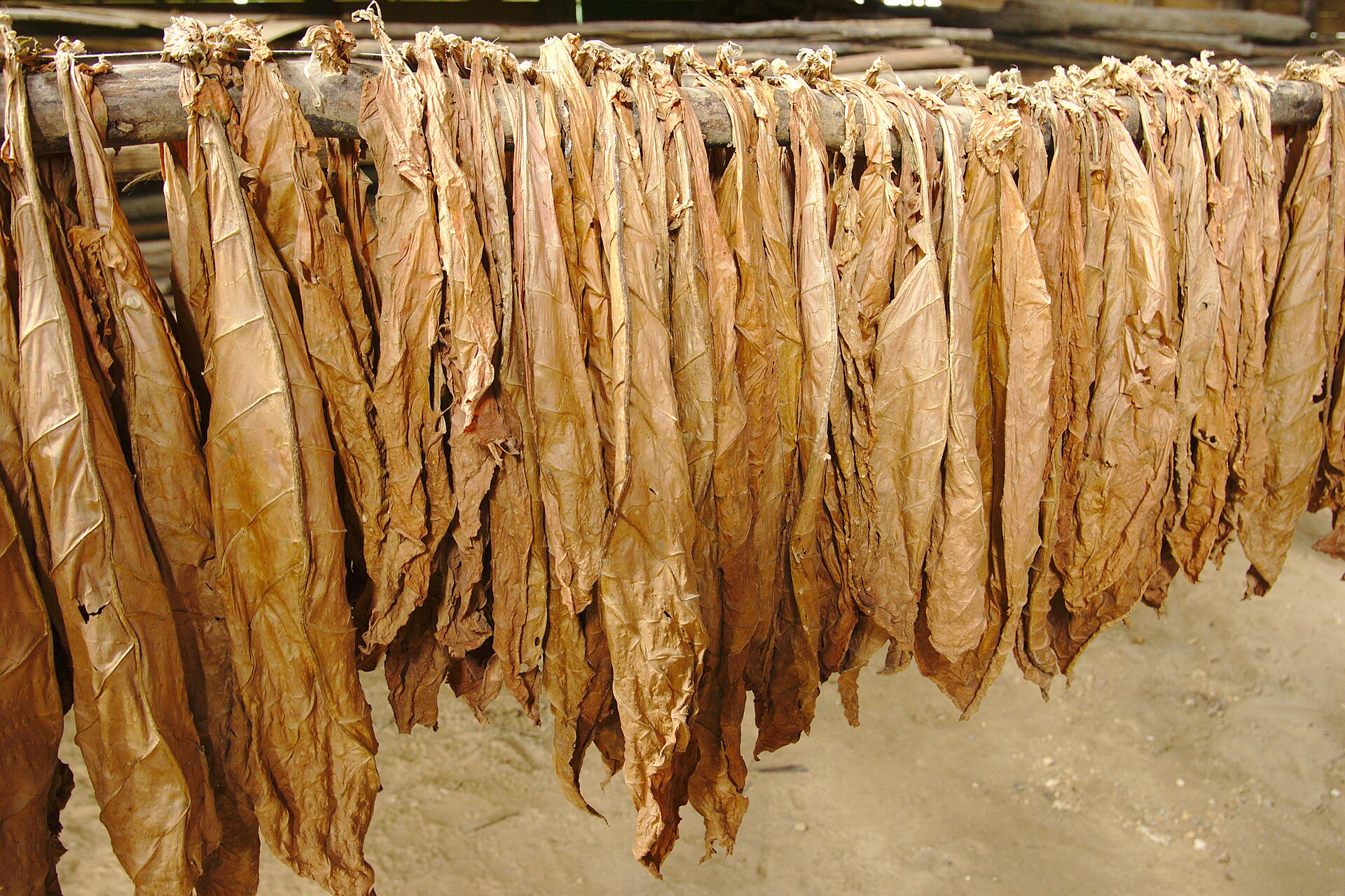
Leaves air-curing — Photo: Alexander Klink · CC BY 4.0
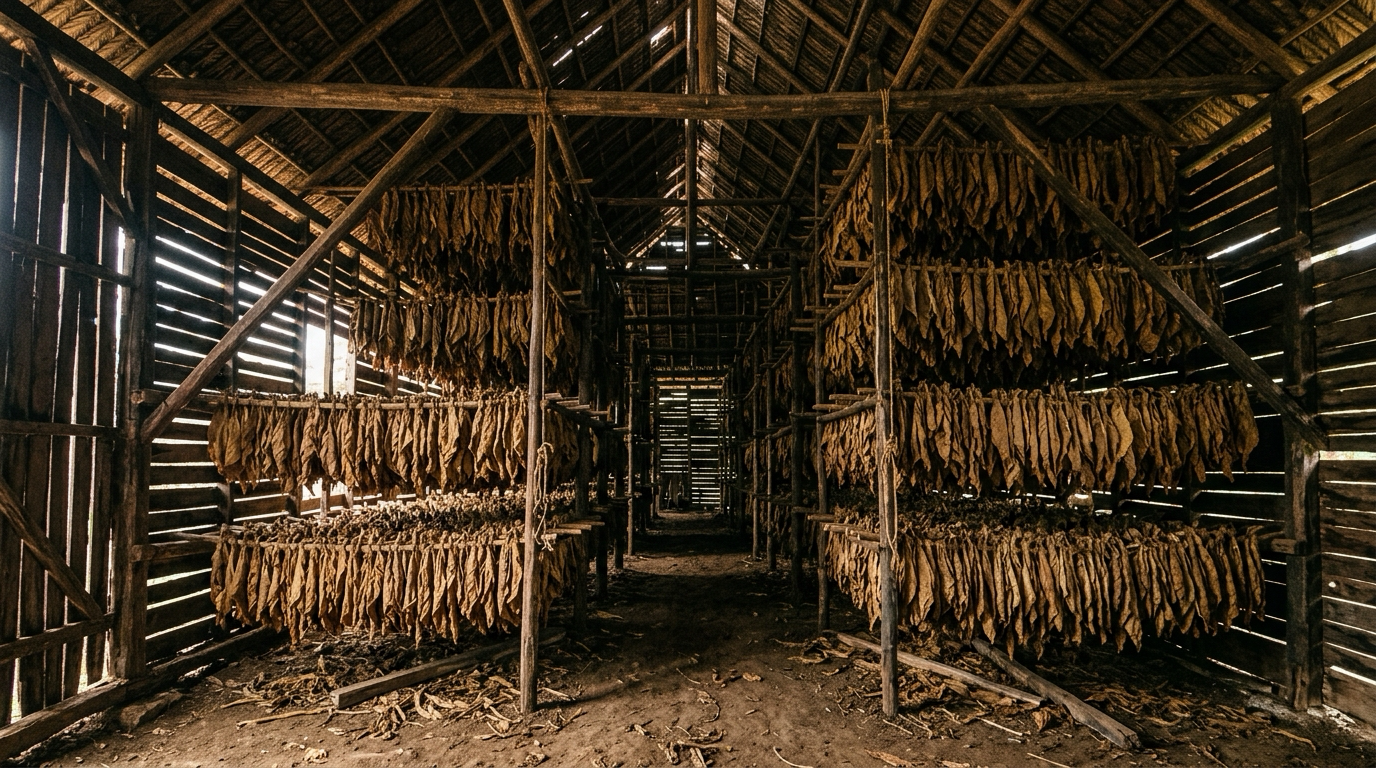
Inside a curing house — Illustration, MokaCigar
The freshly harvested green leaves are brought to the *casa de tabaco*, the traditional wooden curing barn that sits on the edge of the plantation. Here, they are threaded in pairs using cotton thread and hung over wooden poles, known as *cujes*. These poles are progressively raised into the rafters of the barn as they are filled.
Over approximately 50 days, the leaves undergo natural air-curing. The climate inside the barn is controlled simply by opening and closing wooden doors to adjust ventilation, temperature and humidity. During this critical period, the leaves gradually lose moisture, turning from bright green to yellow, and finally to a rich, golden brown, developing their initial aromas.
First and second fermentation
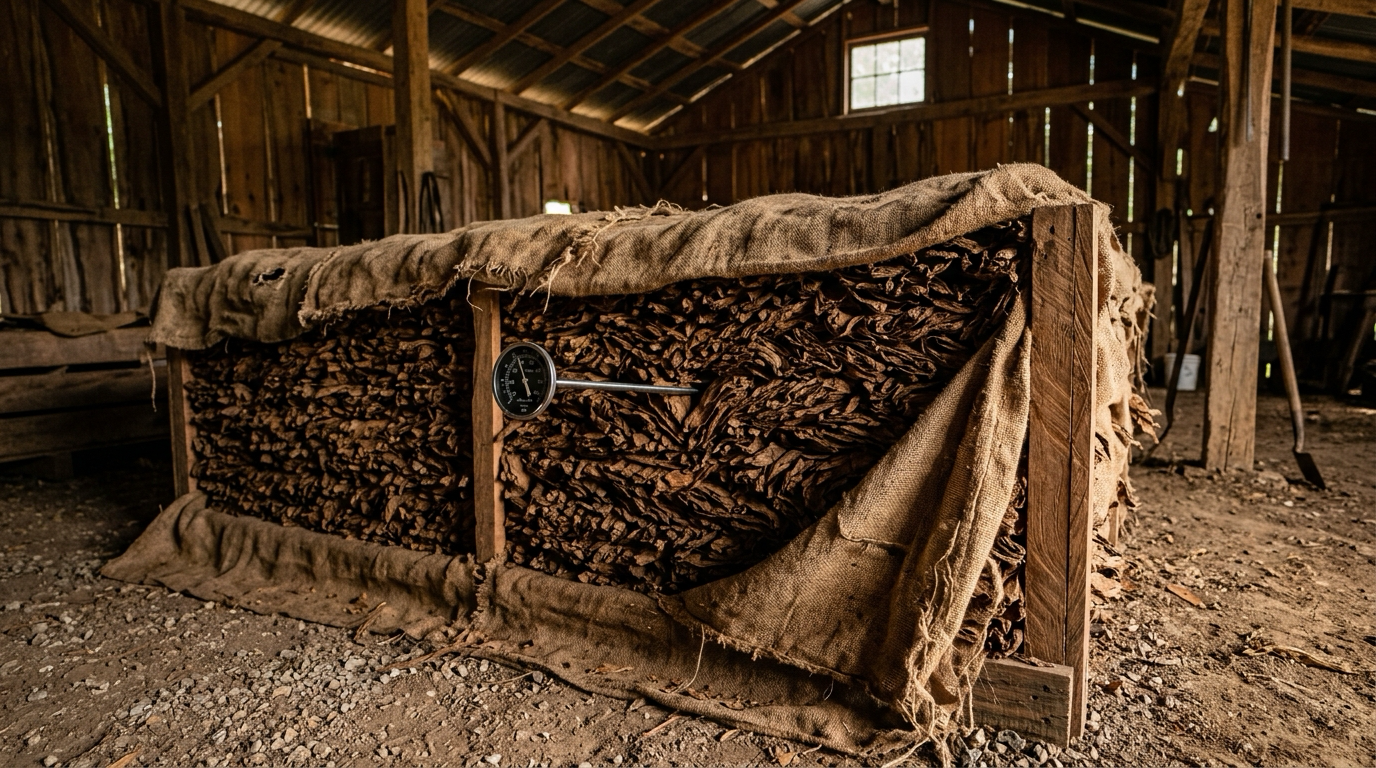
Fermentation piles — Illustration, MokaCigar
Once cured, the leaves are gathered into large piles, called *pilones*, for their first fermentation. The residual moisture and the weight of the leaves generate heat, initiating a chemical process that breaks down impurities, reduces acidity and lowers the nicotine content. The temperature inside the *pilón* is closely monitored with thermometers; if it gets too hot, the pile is broken down and rebuilt to prevent the tobacco from rotting.
After the first fermentation, the leaves are taken to the sorting house (*escogida*). They are moistened to prevent breakage and the central lower vein is partially stripped away. They are then sorted by size, colour and texture. Following this, the filler and binder leaves undergo a second, longer fermentation in larger *pilones* to refine their flavour further. Some prestigious marques, such as Cohiba, mandate a third fermentation in wooden barrels for their filler leaves.
Ageing in tercios and factory preparation
Once the fermentation processes are complete, the leaves must be rested. They are packed into bales made from royal palm bark, known as *tercios*. This natural material allows the tobacco to breathe while protecting it from external moisture and pests. The bark is tightly bound, compressing the leaves and allowing their flavours to marry.
The tobacco is aged in warehouses, a process that can take anywhere from a few months to several years, depending on the type of leaf. *Ligero* leaves require the longest ageing to mellow their strength, while *volado* requires the least. Only when the leaves are deemed ready are they transported to the factory, where the *torcedores* will finally construct them *totalmente a mano* (totally by hand). Using only a wooden board, a semi-circular blade known as a *chaveta*, and a dab of vegetable glue, the roller assembles the finished cigar. From the sowing of the seed in the *semillero* to the rolling table, the entire timeline typically spans between one and three years.
At MokaCigar
Understanding the agricultural origin of a Habano adds considerable depth to the smoking experience. The careful progression from seed to aged leaf dictates the construction, aroma and ageing potential of the final product. We ensure that every box we hold has been treated with the same care during transport and storage as it received in the fields of Pinar del Río. Whether you are looking for light-bodied blends or complex, aged stock, explore our full collection of verified Habanos in the shop.