A short history of the Cuban cigar
The history of the Cuban cigar is the history of the island itself, spanning indigenous agriculture, European monopolies, political revolution, and modern global commercialisation. Today, a Habano represents the culmination of centuries of agrarian refinement and industrial structuring. Understanding this timeline is essential for the serious collector tracing the provenance, production eras, and evolution of their humidors' contents.
Taíno origins and the arrival of the Spanish
Long before European contact, the indigenous Taíno people of Cuba cultivated and smoked a rudimentary form of the cigar. When Christopher Columbus arrived in 1492, his crew members, including Rodrigo de Jerez and Luis de Torres, observed the locals smoking rolled bunches of dried leaves. The Taíno word for this bunch of leaves was *cohiba*, a term that would be resurrected centuries later for Cuba's flagship brand.
The Spanish quickly adopted the habit, and tobacco seeds were brought back to Europe. Initially, the plant was viewed with suspicion and faced various bans across European courts. However, demand grew steadily, establishing tobacco as a highly valuable colonial commodity. By the seventeenth century, Cuban tobacco was recognised for its superior characteristics, owing to the unique combination of soil and climate in regions like the Vuelta Abajo.
During this early colonial period, the trade was highly unstructured. Small, independent workshops known as *chinchales* produced cigars primarily for local consumption or illicit trade. Spain sought to control this lucrative crop, eventually imposing strict regulations that forced Cuban growers to sell their entire yield directly to the Spanish Crown at fixed prices.
The royal monopoly and the 1817 liberalisation
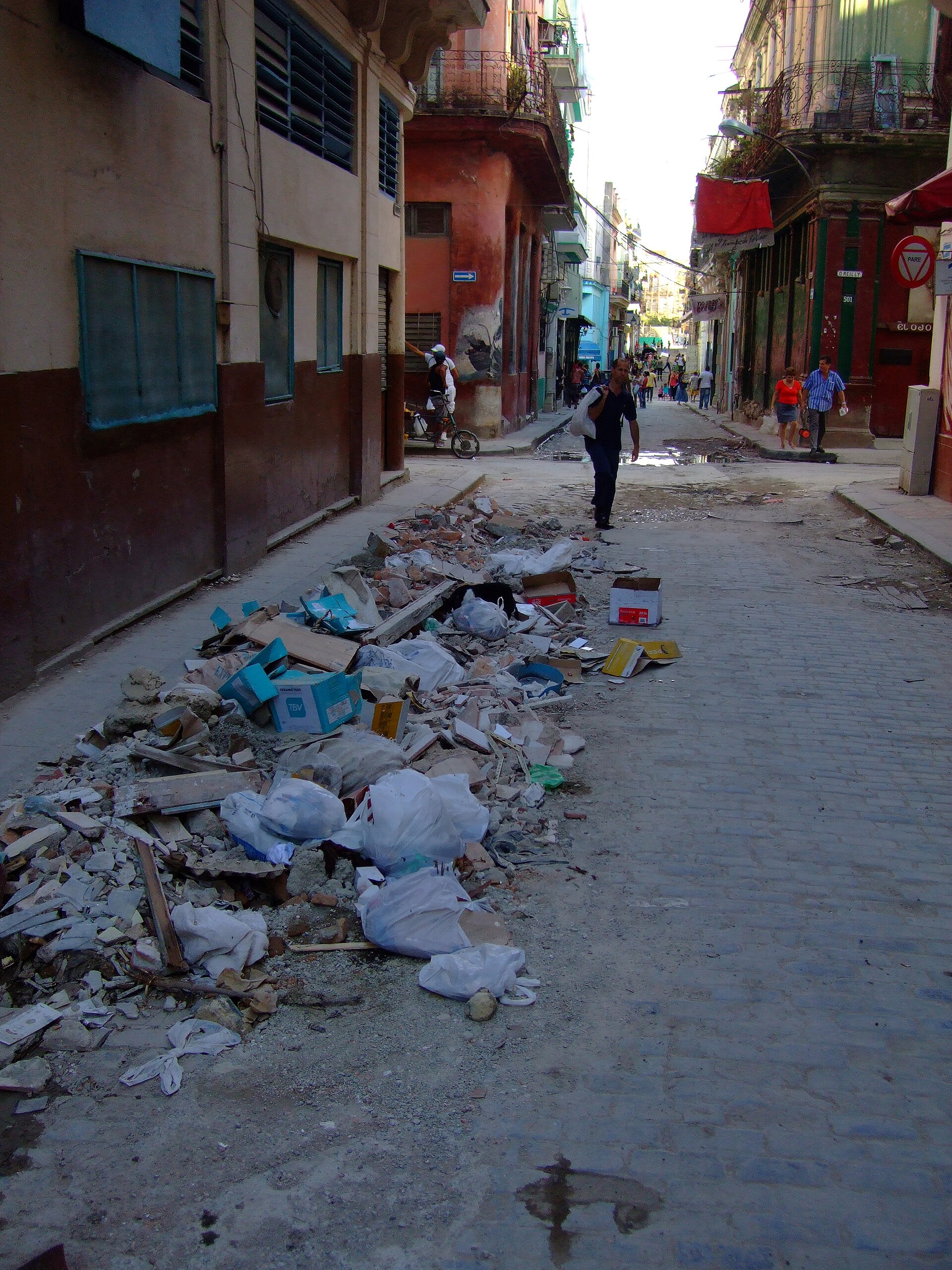
Habana Vieja — Photo: Arnoud Joris Maaswinkel · CC BY-SA 4.0
For much of the eighteenth century, the Spanish Crown operated a rigid monopoly over the Cuban tobacco trade, known as the *Estanco del Tabaco*. This system stifled local enterprise, as all processing and export operations were centrally controlled by the state. The monopoly caused frequent unrest among the *vegueros* (tobacco farmers), who found themselves impoverished despite cultivating a globally demanded product.
The turning point occurred in 1817. King Ferdinand VII issued the Royal Decree of Free Trade, entirely abolishing the state monopoly. This decree allowed Cubans to legally grow, manufacture, and export their own cigars to the global market. The result was an immediate and profound "Tobacco Boom" across the island.
Capital flooded into Havana, and the rudimentary *chinchales* began to give way to larger, more organised manufacturing operations. This liberalisation established the economic foundation for the great Havana factories that would define the nineteenth century. The ability to export freely allowed Cuban cigar makers to build international reputations for their specific blends and vitolas.
The nineteenth-century golden age of the Havana factories
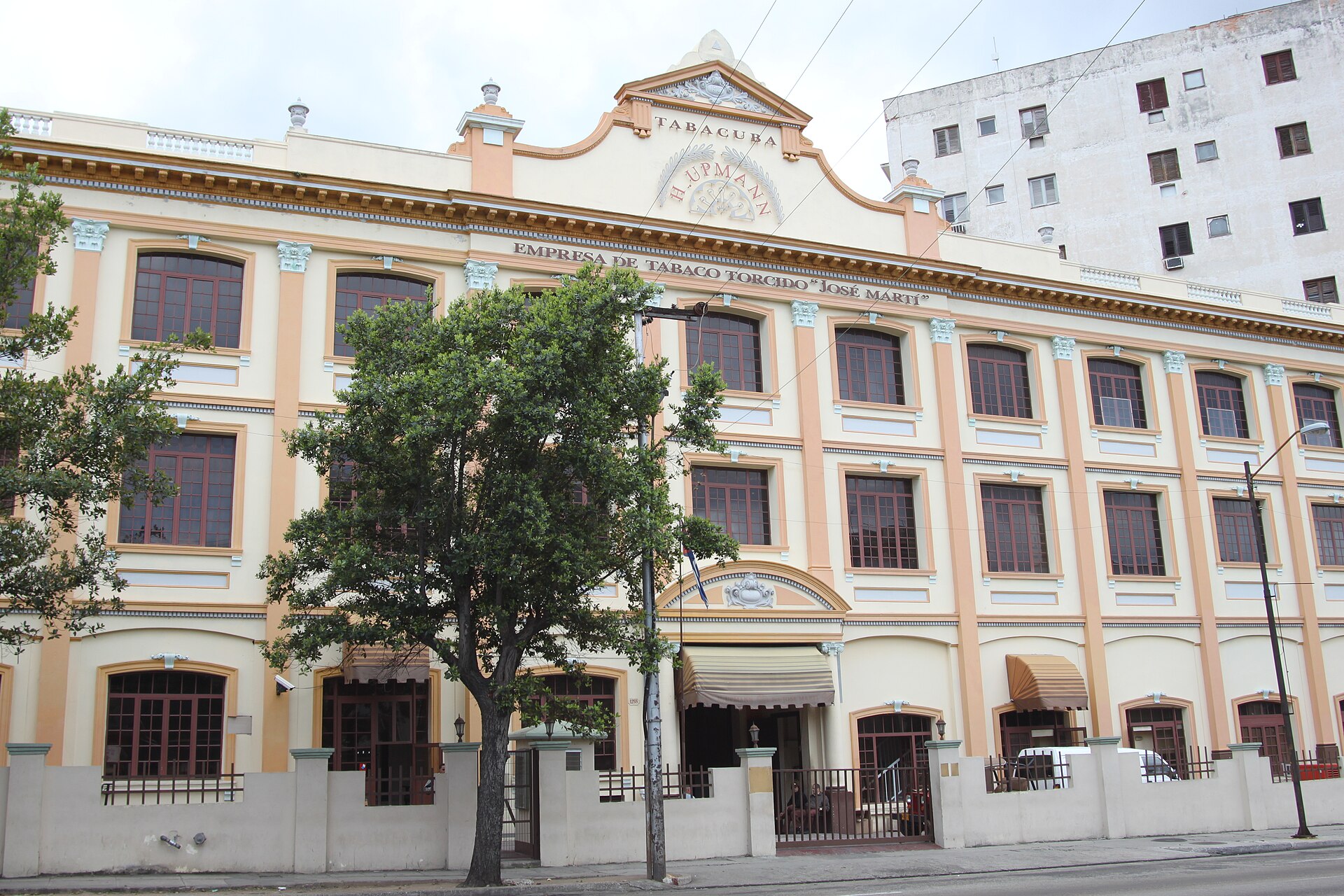
the H. Upmann factory — Photo: enrique1363 · CC BY-SA 3.0
The decades following the 1817 decree are widely considered the first golden age of the Cuban cigar. The mid-nineteenth century saw the foundation of the legendary "Family Brands" that still dominate the market today. Por Larrañaga was established in 1834, and remains the oldest continuously produced brand in the Habanos portfolio.
This was followed rapidly by other foundational marques. Punch was registered in 1840, targeting the burgeoning British market. In 1844, the banker Hermann Upmann founded the H. Upmann brand, and Jaime Partagás established the Partagás factory. The following year, 1845, saw the establishment of the formidable La Corona factory, which would become a powerhouse of production.
By the early twentieth century, Cuban cigars had become the undisputed global standard for luxury. The industry was dominated by powerful private families, such as the Cifuentes family, who oversaw Partagás, and the Menéndez and García families, who controlled Montecristo and H. Upmann. These families built massive, architecturally significant factories in Havana, establishing rigorous quality control standards and expanding their distribution networks across Europe and the Americas.
The Cuban revolution and the exile brands controversy
The Cuban Revolution of 1959 fundamentally restructured the cigar industry. In 1960, the new revolutionary government nationalised the entire tobacco sector. State-appointed administrators, known as *interventores*, physically took control of the great factories in Havana. The private owners, including the Menéndez, García, and Cifuentes families, were dispossessed of their businesses.
Many of these prominent tobacco families fled Cuba. They relocated to other cigar-producing nations, primarily the Dominican Republic, Honduras, and Nicaragua, bringing their agricultural expertise and proprietary knowledge with them. This exodus led to the creation of the "exile brands."
A complex trademark paradox emerged from this period. Because the United States government implemented a trade embargo against Cuba in 1962 and did not recognise the nationalisation of private assets, the exiled families were legally permitted to register their original brand names in the US. Consequently, to this day, names like Montecristo, Partagás, and Romeo y Julieta exist as non-Cuban cigars manufactured for the American market, completely distinct from the original Habanos produced in Cuba.
During this period of domestic upheaval, the Cuban government sought to consolidate its operations. In 1962, Cubatabaco (Empresa Cubana del Tabaco) was formed as the state enterprise responsible for managing all aspects of the industry, from agriculture to global distribution. In 1966, Cohiba was created at the El Laguito factory, initially serving strictly as a private brand for Fidel Castro and a diplomatic gift, before its commercial launch in Spain in 1982.
Cubatabaco, Habanos S.A. and the 1994 joint venture
The early 1990s presented severe economic challenges for Cuba following the collapse of the Soviet Union. In response, the Cuban government restructured its export industries to attract foreign investment. In 1994, Habanos S.A. was established to serve as the exclusive global commercial arm for Cuban cigars, taking over international distribution and marketing from Cubatabaco.
Habanos S.A. operates as a 50/50 joint venture between the Cuban state and a succession of international corporate partners. This injection of foreign capital and modern corporate strategy profoundly changed the industry. A major rationalisation of the portfolio occurred between 2002 and 2005.
During this rationalisation, Habanos S.A. discontinued hundreds of redundant vitolas and entirely phased out several historical brands, such as Cabañas and Gispert. The strategy shifted towards focusing resources on core global brands and improving overall consistency. In 2019, Habanos S.A. formalised this structure by categorising its portfolio into Global, Value, Volume, and Other Brands.
The modern era of specialised production
In the twenty-first century, Habanos S.A. has shifted its focus towards specialised, high-end productions that appeal directly to collectors. This era is characterised by limited releases, extended ageing processes, and a heightened emphasis on terroir. The introduction of these lines has reshaped the secondary market and the way collectors curate their humidors.
Edición Limitada — Year Introduced: 2000 — Defining Characteristic: Uses wrappers, binders, and fillers aged for a minimum of two years. The sizes are usually rare or unique to the specific brand.
Edición Regional — Year Introduced: 2005 — Defining Characteristic: Produced exclusively for a specific regional distributor, often reviving discontinued vitolas or introducing entirely new formats.
Gran Reserva — Year Introduced: 2009 — Defining Characteristic: Represents the pinnacle of standard production, utilising tobacco leaves aged for a minimum of five years before rolling.
Cohiba Behike (BHK) — Year Introduced: 2010 — Defining Characteristic: Incorporates the scarce *medio tiempo* leaf from the top of the tobacco plant, adding distinct strength and complexity.
These modern lines require a deep understanding of production dates and factory origins. The success of the Edición Limitada programme paved the way for highly sought-after releases like the Cohiba Behike line in 2010, which remains one of the most heavily counterfeited cigars on the market, underscoring the need for rigorous authentication.
The UK's Hunters & Frankau and English Market Selection
The United Kingdom holds a unique position in the history of the Cuban cigar, largely due to Hunters & Frankau. Founded in 1790, the company is the exclusive distributor of Habanos in the UK and one of the oldest cigar merchants in the world. Their influence on the sizing, blending, and naming of Cuban cigars over two centuries is unmatched by any other regional distributor.
The concept of English Market Selection (EMS) is central to UK collecting. Originally a classification used in Cuba to designate the finest natural wrappers intended for the discerning British market, it is today a physical stamp applied by Hunters & Frankau.
When a box arrives in the UK, it undergoes independent quality control. Passing boxes receive the EMS stamp, which guarantees provenance, optimal condition, and that the appropriate UK duties have been paid. For collectors, an EMS stamp is a significant indicator of reliability and value.
What history means for a collector today
For the serious collector, the history of the Cuban cigar is not merely academic; it is an applied science. Knowing the timeline of nationalisation and brand rationalisation helps a collector date vintage boxes and understand the rarity of discontinued vitolas. It provides the context necessary for reading box codes accurately.
Understanding this history is also the primary defence against fraud. Knowing that the Edición Limitada programme began in 2000, or that the Behike 52 did not exist before 2010, immediately identifies poor counterfeits. We recommend all collectors familiarise themselves with our guide on how to spot fake Cuban cigars to protect their investments.
Ultimately, smoking a vintage Habano is an exercise in engaging with history. The factory code on the bottom of a box connects the smoker to a specific moment in Havana's industrial timeline, just as the blend connects them to the agricultural yield of that specific year in the Vuelta Abajo.
At MokaCigar
Understanding the provenance and history of a box is the cornerstone of collecting. At MokaCigar, we rigorously verify the factory codes, release dates, and EMS status of our entire inventory, ensuring our clients receive precisely what the historical record dictates. To explore our current selection of authenticated Habanos, visit our shop.